

















The mother of the bride occupies an unusual position at a wedding. She is not a guest, and she is not the bride. She appears in the formal photographs, she is often in the receiving line, and her outfit is settled months in advance and remembered long afterwards.
Most advice written for this role is built around restraint. Wear something understated, it says, and stay out of the way. There is a difference between restraint and invisibility, though, and a great deal of the advice conflates the two.
Laurence has designed bold, characterful jewellery from her London studio since 2006, working from a belief that the largest occasions in a life deserve pieces chosen with intention rather than caution. This guide covers how your role shapes the decision, how to coordinate with the bridal party without matching it, how to choose against your outfit and neckline, and which pieces are worth considering. The same principles apply if you are choosing mother of the groom jewellery, and there is a dedicated section on the differences further down.
Your Role in the Day Shapes What You Wear
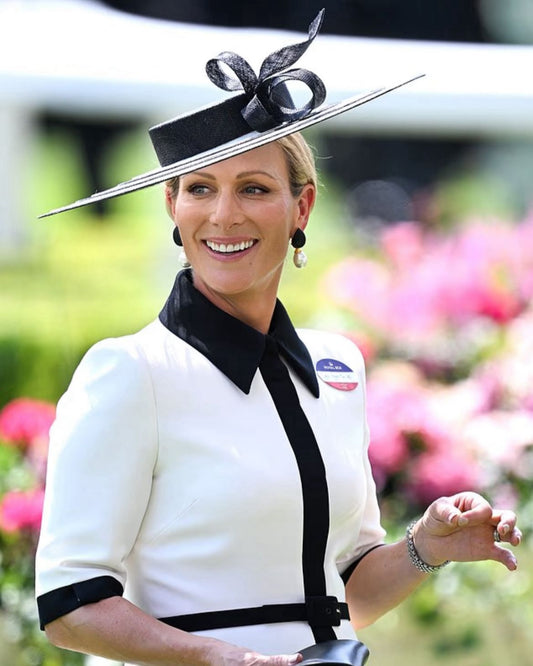
Dressing as the mother of the bride is a different exercise from dressing as a guest, and the difference is practical rather than ceremonial. You will be photographed formally, you will likely greet every person who attends, and you will be wearing the same pieces from early morning preparation until the last of the evening.
Three consequences follow from that.
- Photography. Jewellery reads differently through a lens than it does in a mirror. Stones with depth and movement hold their character in a photograph, where flat polished metal can either go dull or flare under a flash. Choosing pieces with genuine colour in them means the jewellery still looks like something in the album rather than a bright smudge.
- Duration. A wedding day runs considerably longer than the events most jewellery is bought for. Weight and fastening security matter more here than they would over three hours, so you can stop thinking about your earrings by mid-afternoon and pay attention to the day instead.
- Contact. You will embrace a great many people. Anything with a catching edge, a snagging setting or an uncertain clasp will make itself known quickly, which is worth checking before the day rather than during it.
How to Coordinate Without Matching
The governing principle is to complement the bridal party rather than replicate it. Ask the bride about her palette and the formality she has in mind, and treat the answer as context rather than as an instruction to match.
A brief conversation with the mother of the groom is worth having for the same reason. Two women arriving in near-identical looks is easily avoided and awkward to fix on the day.
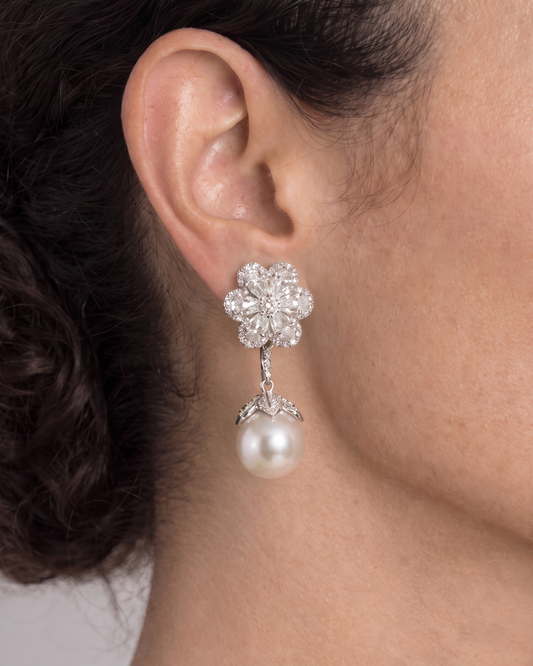
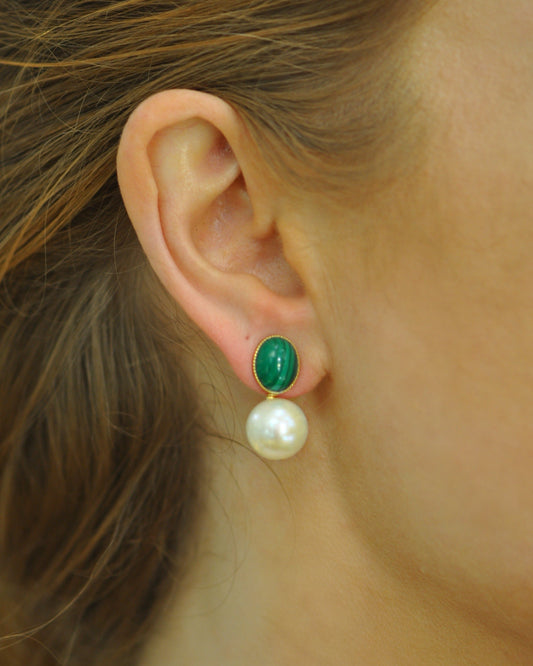
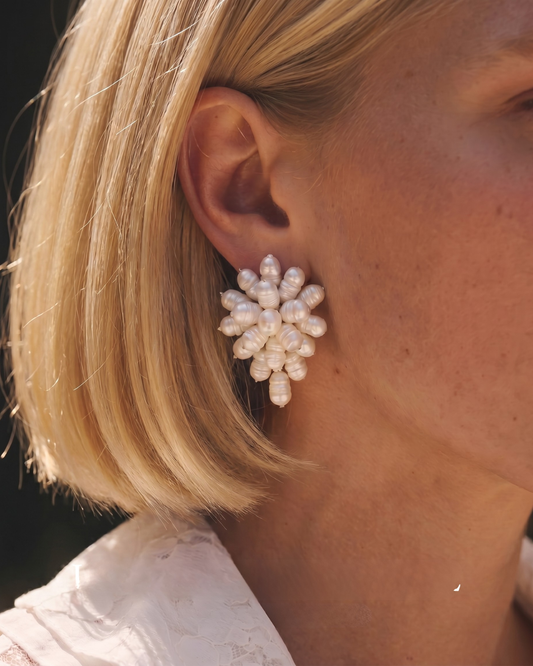
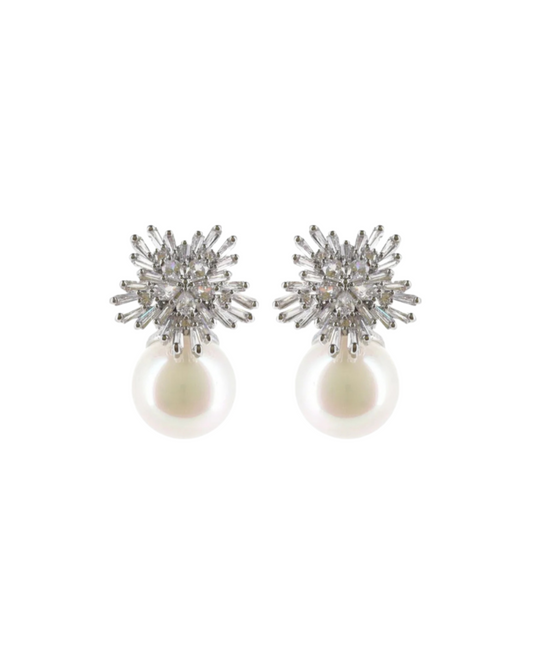
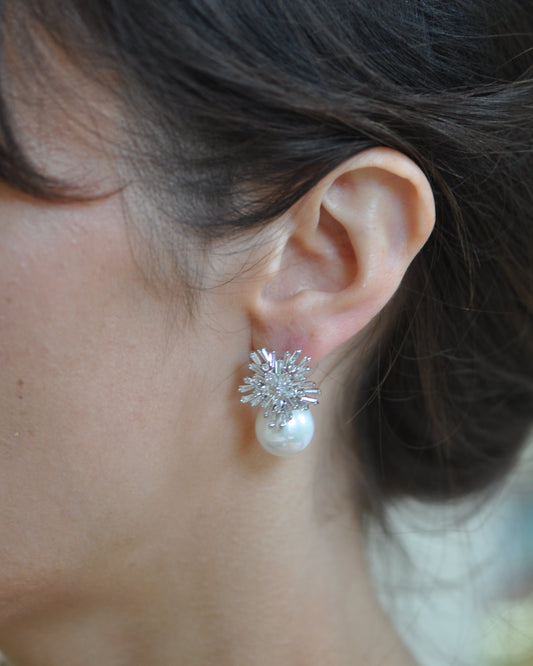
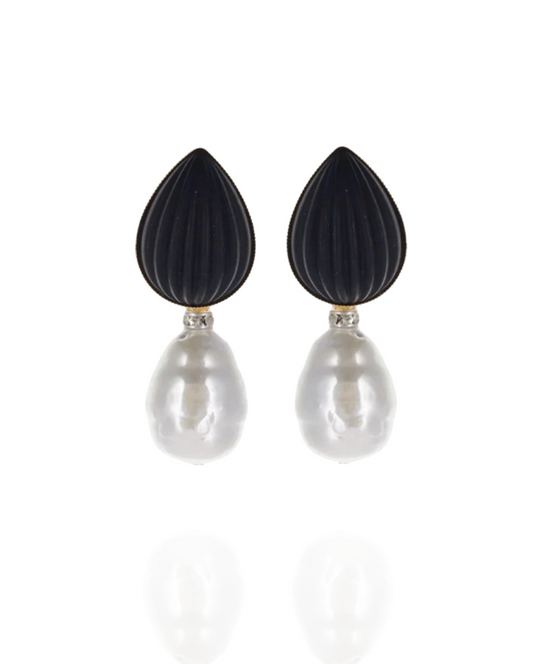
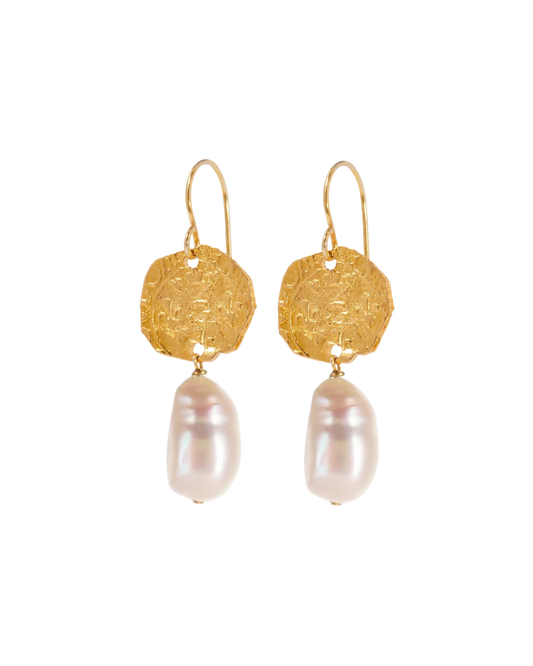
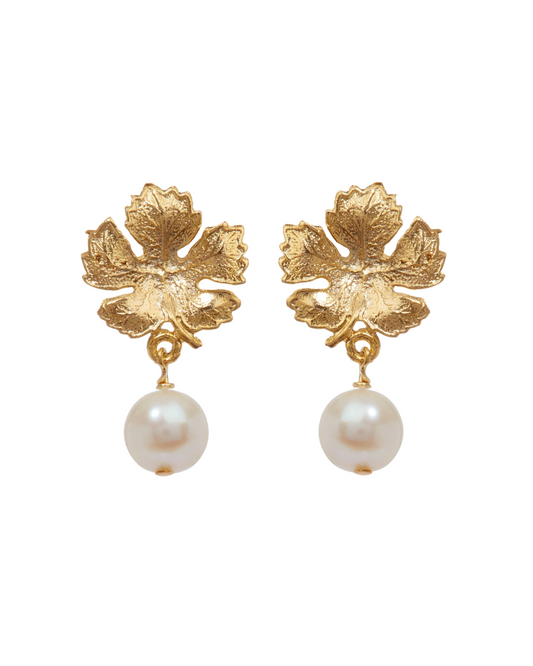
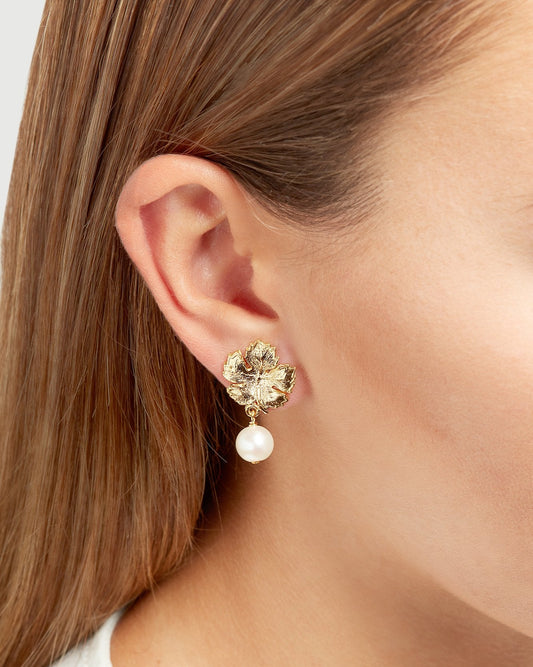
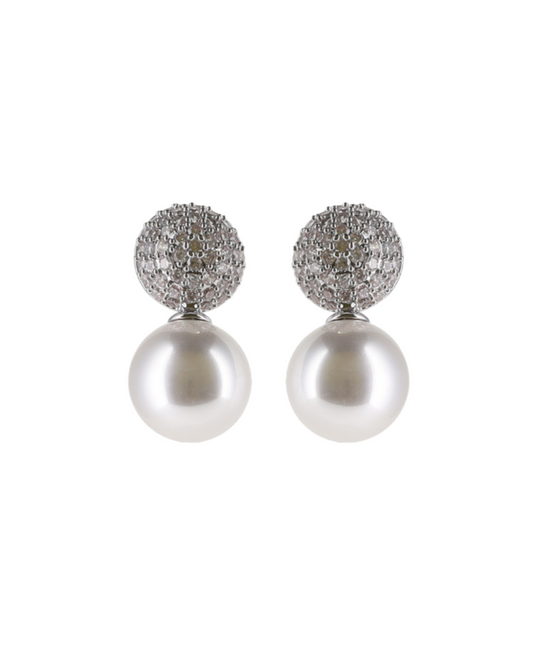
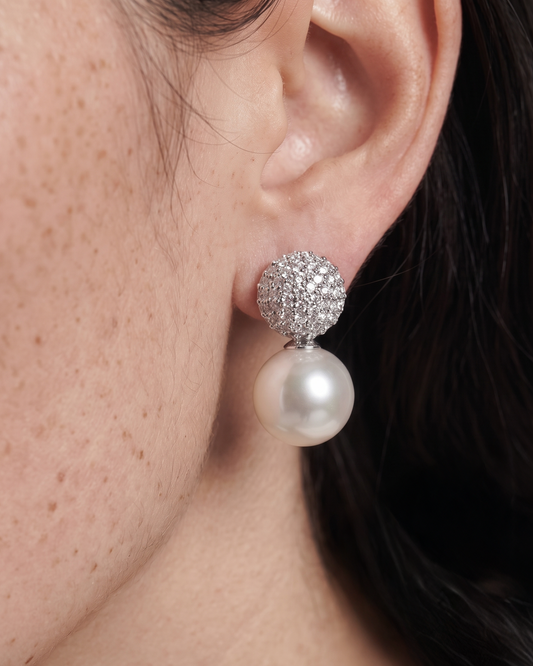
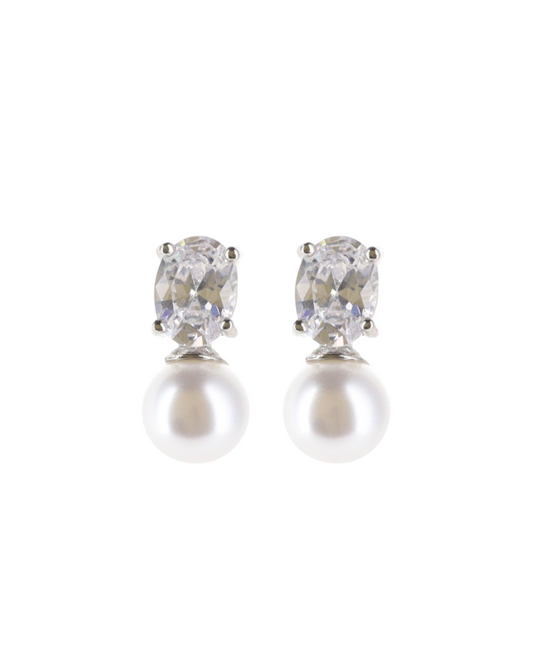
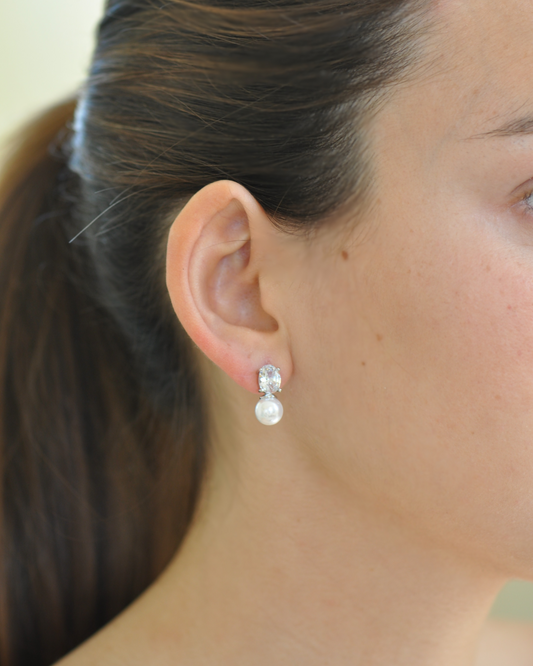
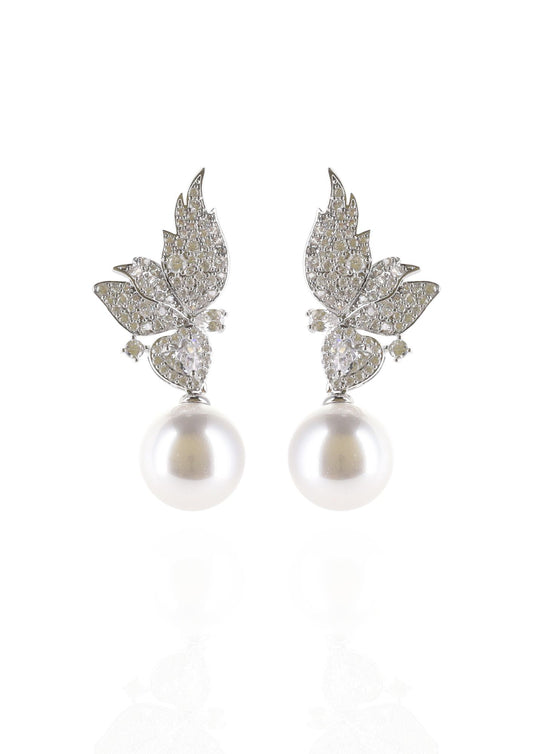
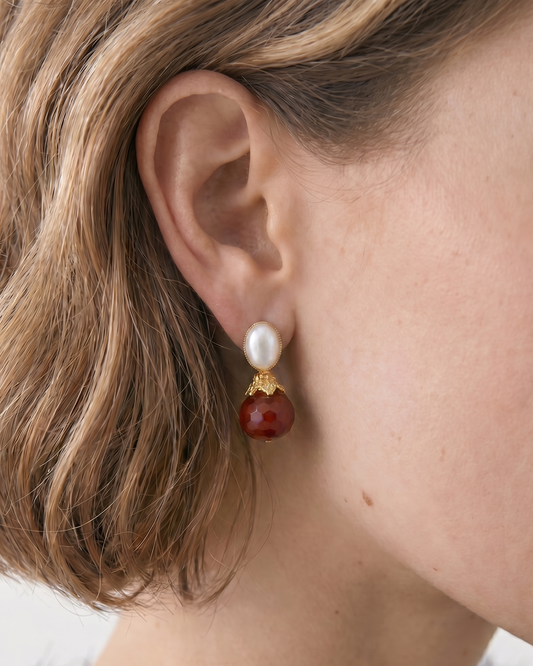
There is one convention worth knowing about colour. Large, plain white pearl pieces can edge toward bridal territory in a way that coloured stones and more considered pearl designs do not.
Matching Jewellery to Your Outfit
Once the outfit is settled, most of the jewellery decision makes itself. Three things do the work: the neckline, the colour, and the metal.
Let the Neckline Decide the Lead Piece
Your neckline determines where the eye goes, so let it settle whether earrings or a necklace lead.
|
Neckline |
Lead Piece |
Why |
|
High or covered |
Earrings |
Keeps the neck clear rather than layering against fabric |
|
Open or V |
Necklace |
A pendant following the line lengthens and flatters |
|
Boat or bateau |
Earrings |
Necklaces tend to sit awkwardly against a horizontal line |
|
Strapless or off the shoulder |
Necklace |
A collar or shorter length sits beautifully against bare skin |
|
Worn with a jacket, bolero or cover-up |
Earrings |
A necklace disappears the moment the jacket goes on |
That last row matters more for this role than for any other, since mother of the bride outfits include a cover-up far more often than guest outfits do. Earrings stay visible either way, which means the look holds together whether the jacket is on or off.
Choosing Stone Colour against Your Outfit
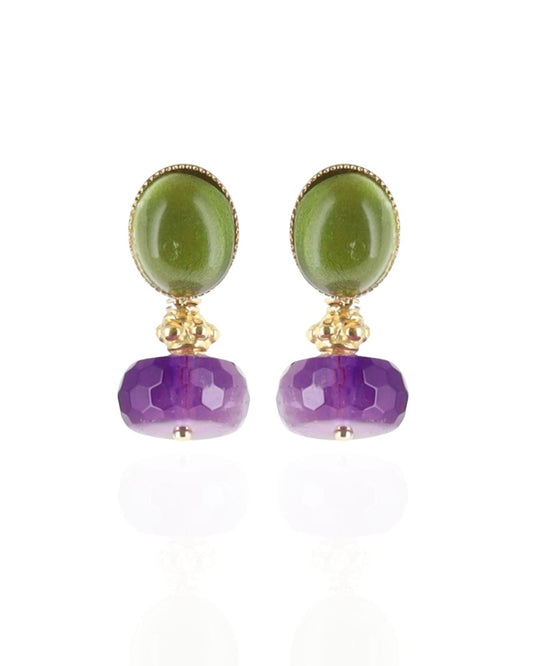
Stones that sit near your outfit's colour without matching it exactly give the whole look more depth, which means the jewellery reads as chosen for the outfit rather than bought to go with it.
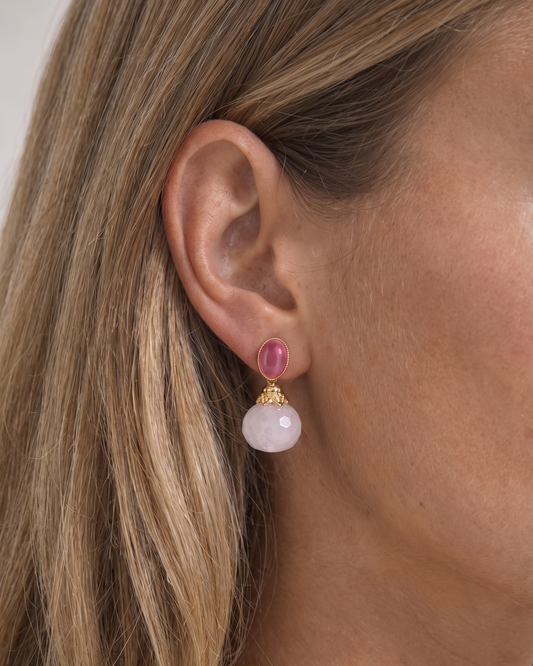
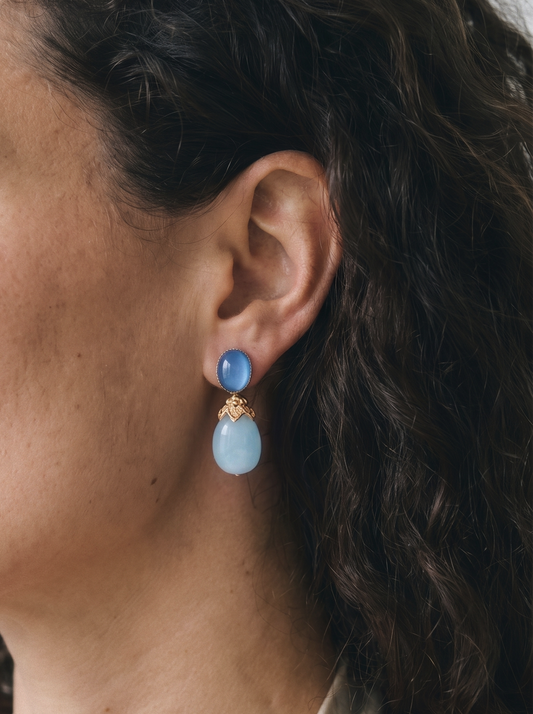
- Muted and neutral outfits, navy, dove grey, taupe, blush, take the strongest colour. This is where a semi-precious stone does the most work in the whole look.
- Patterned or floral outfits are better served by a single stone colour drawn out of the pattern than by a multi-stone piece competing with it, which is exactly the approach that works when choosing jewellery for a floral dress at a summer garden party.
- Jewel-tone outfits suit either a tonal stone or a deliberate contrast, and that is a matter of preference rather than rule.
Season plays a part too. Summer weddings suit brighter stones that catch outdoor light, while autumn and winter weddings tend to suit deeper, warmer tones or cooler stones set against a richer outfit.
Metal Tone
Gold-plated and silver both work, and the decision is usually settled by two things you already know: the hardware on your outfit, and any pieces you already own and intend to wear on the day. Laurence Coste pieces are made from gold-plated sterling silver, so the warmth of gold sits on a silver base that holds its shape and its setting.

The Pieces Worth Considering
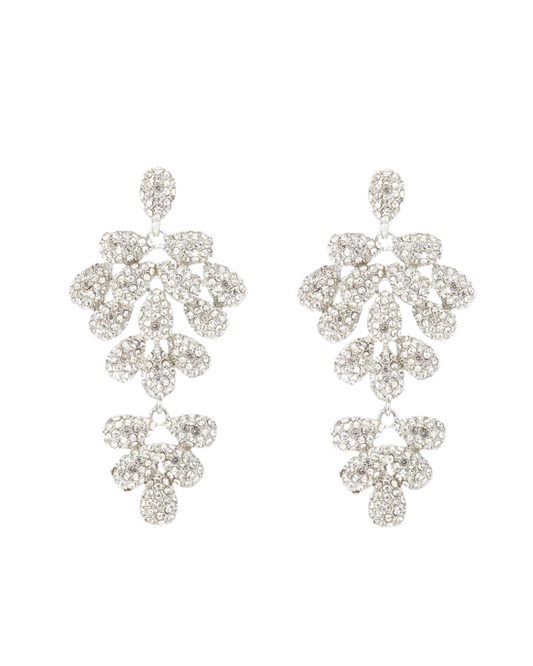
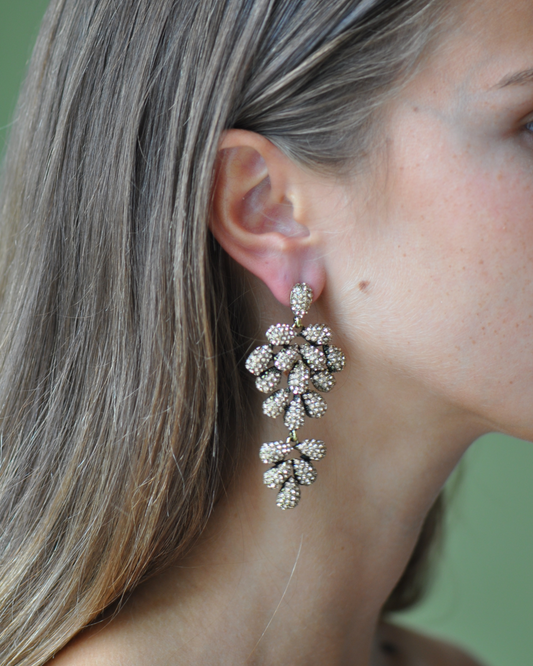
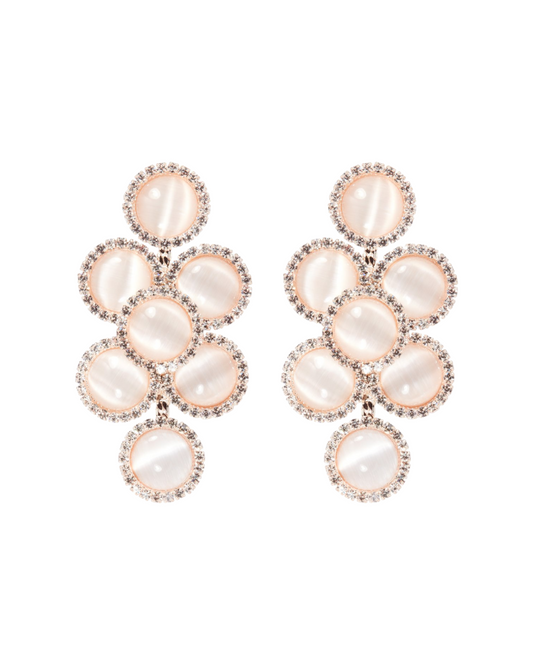
Statement Earrings
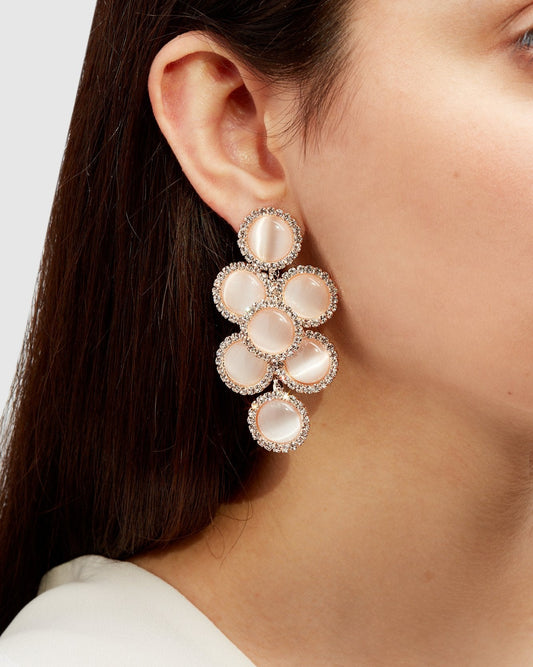
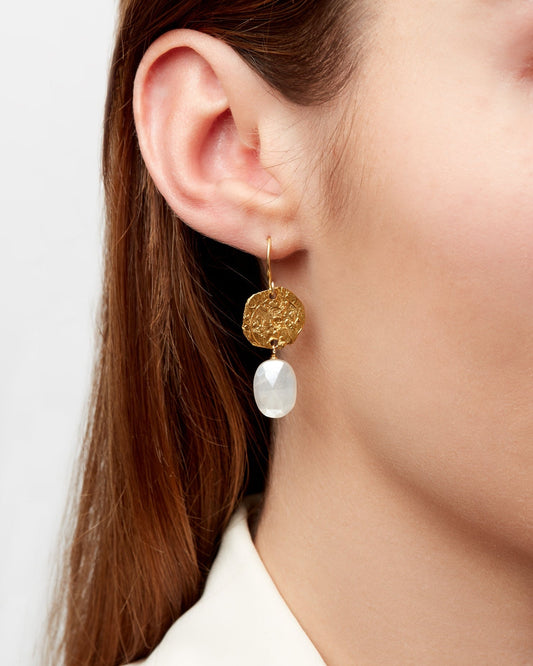
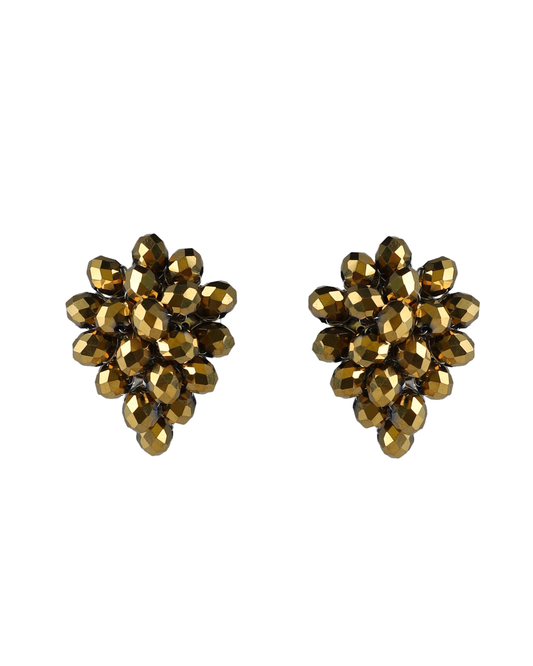
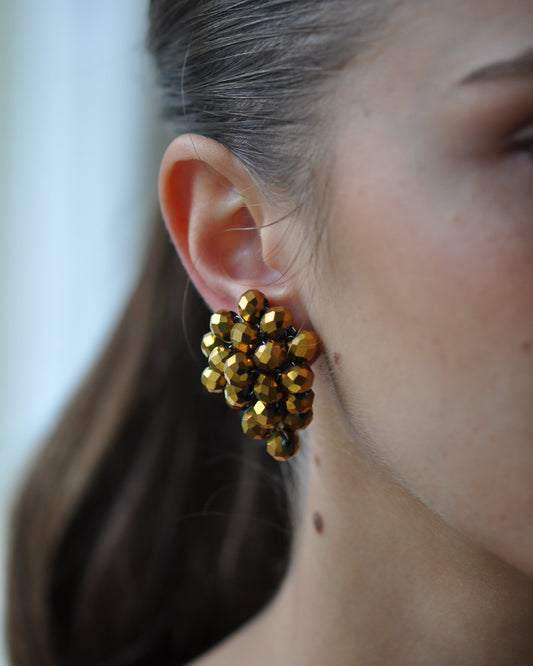
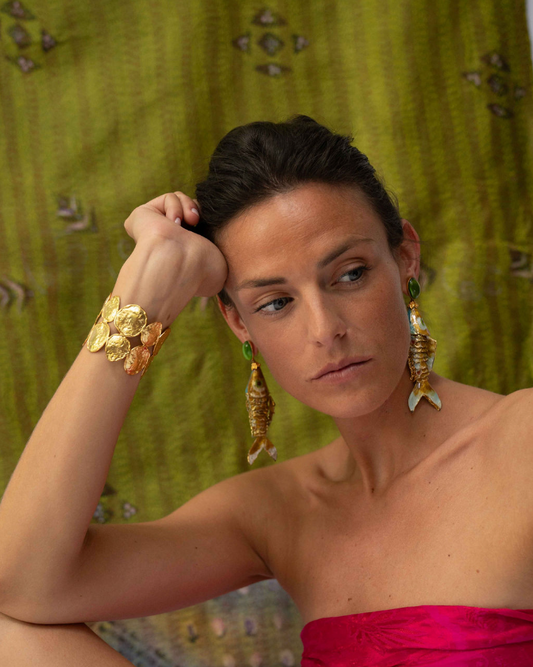
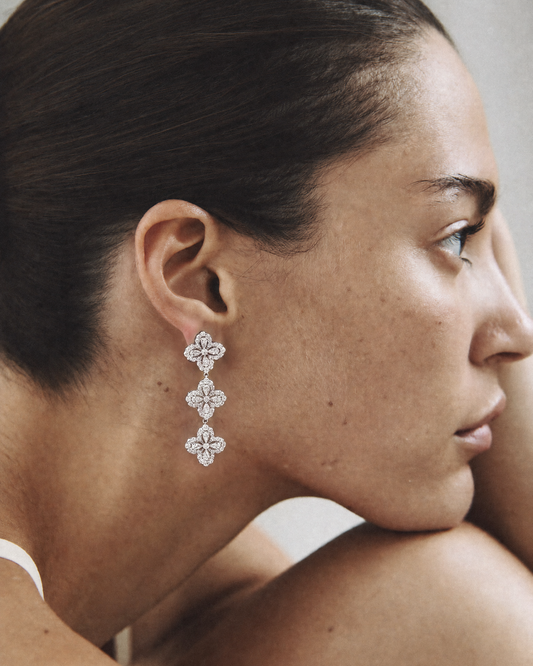
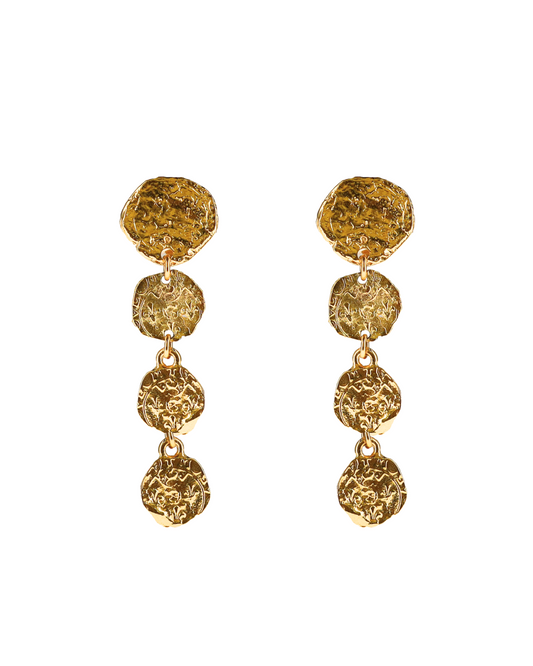
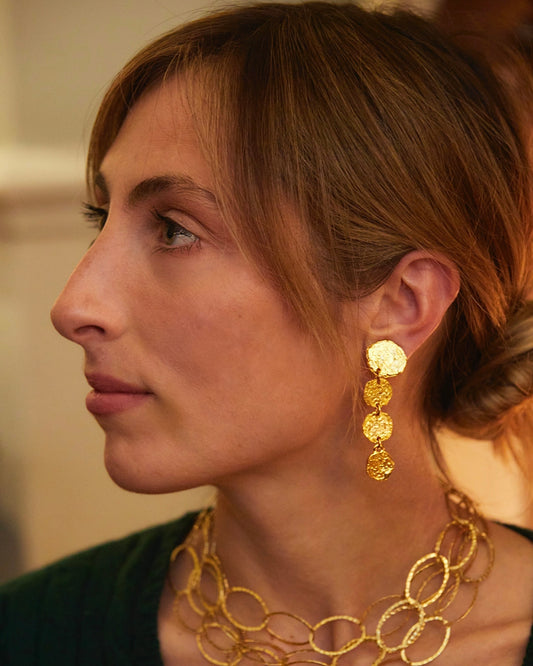
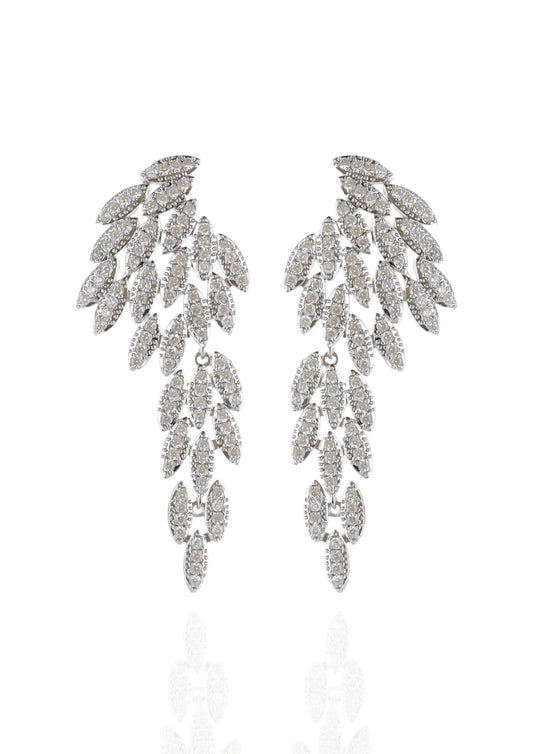
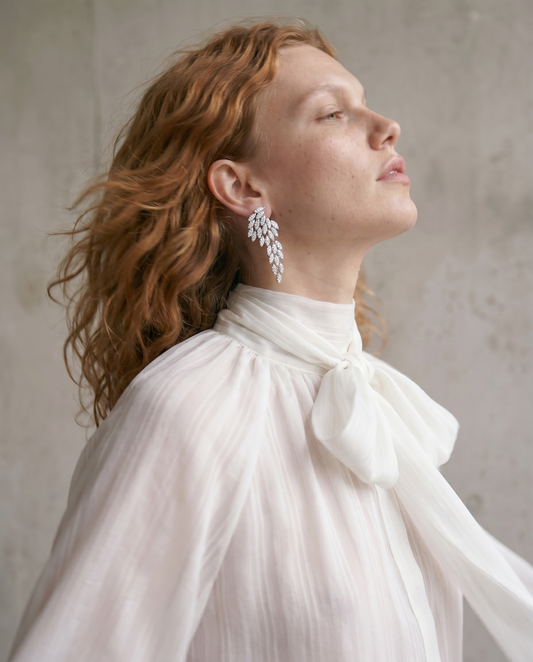
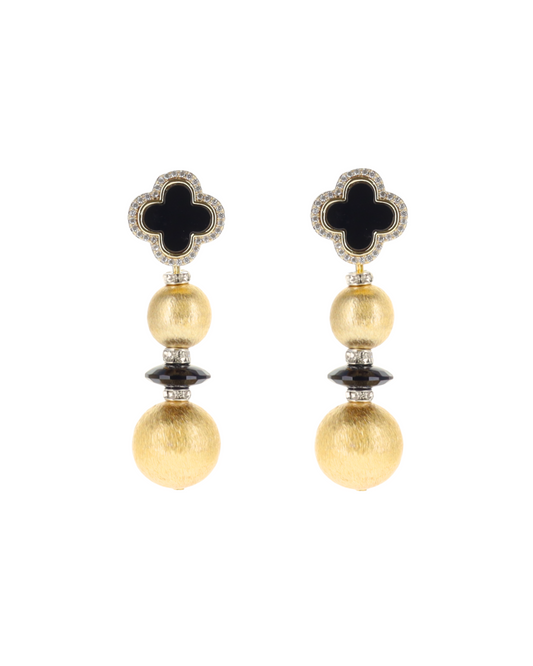
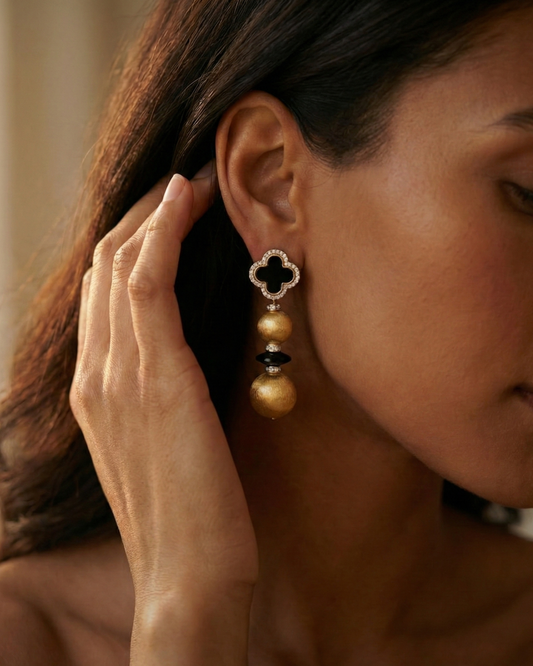
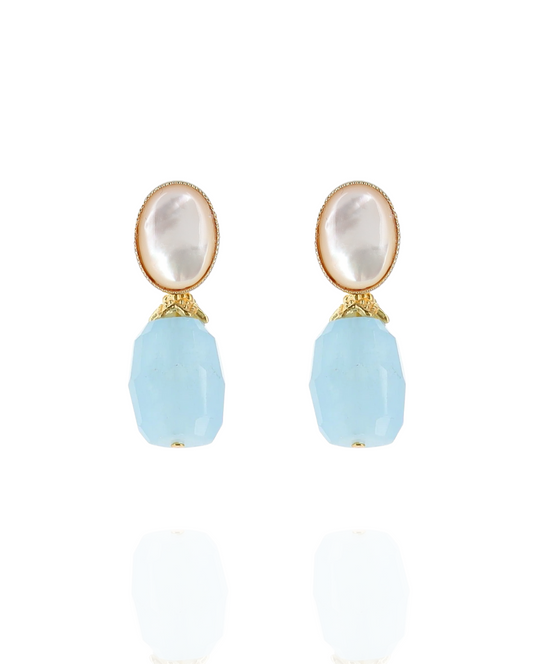
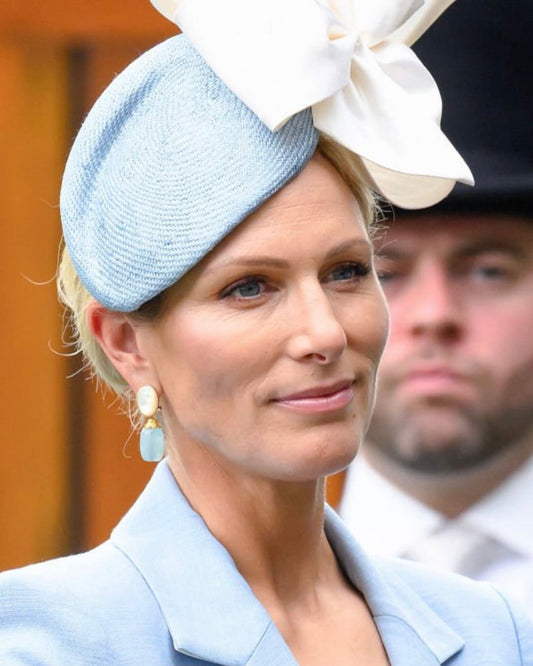
Earrings lead for this role for a practical reason. They sit at exactly the height a camera is aimed at through every formal photograph, and they stay visible with a jacket on or off, which is not true of anything worn at the neck.
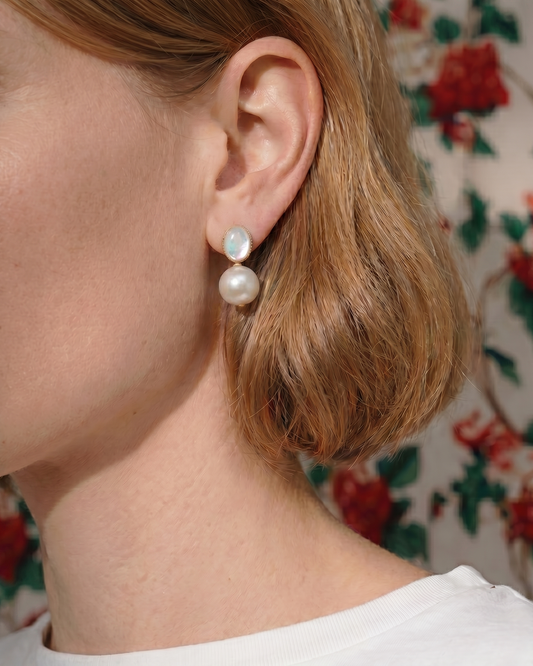
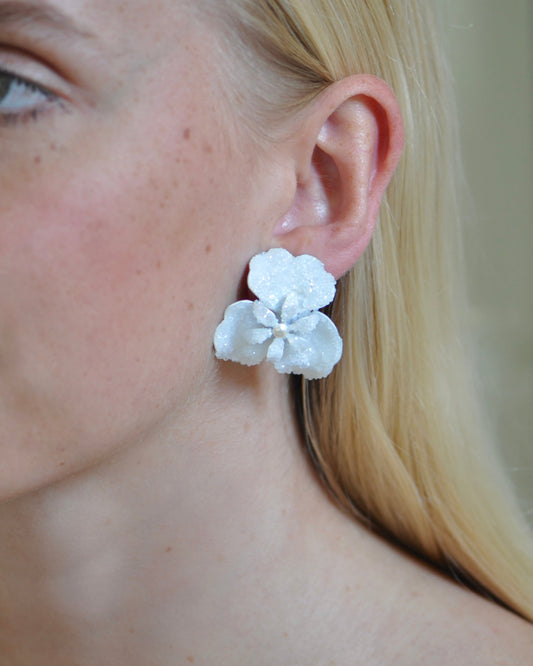
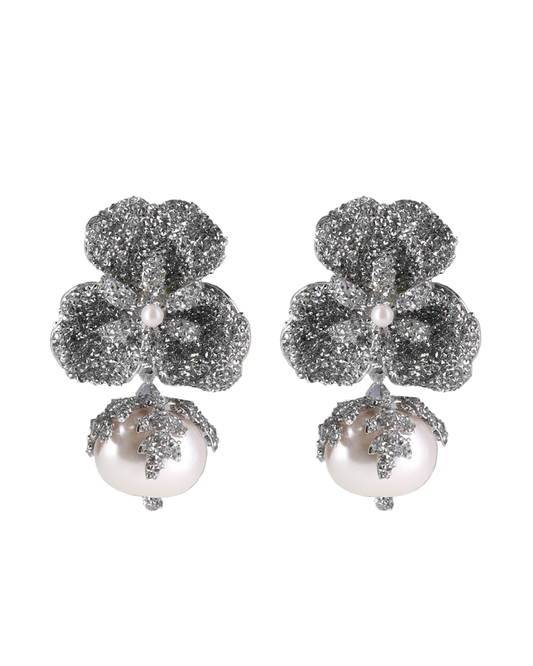
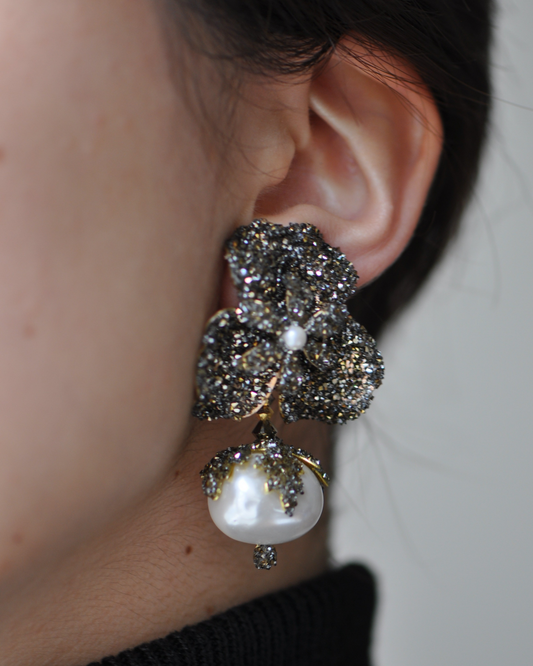
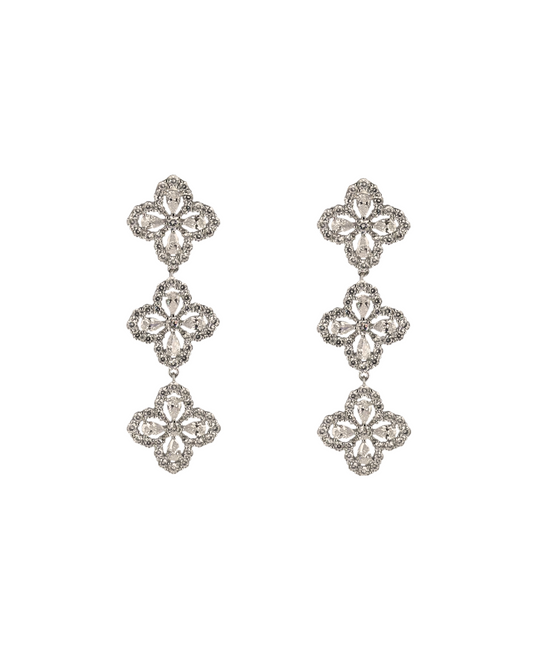
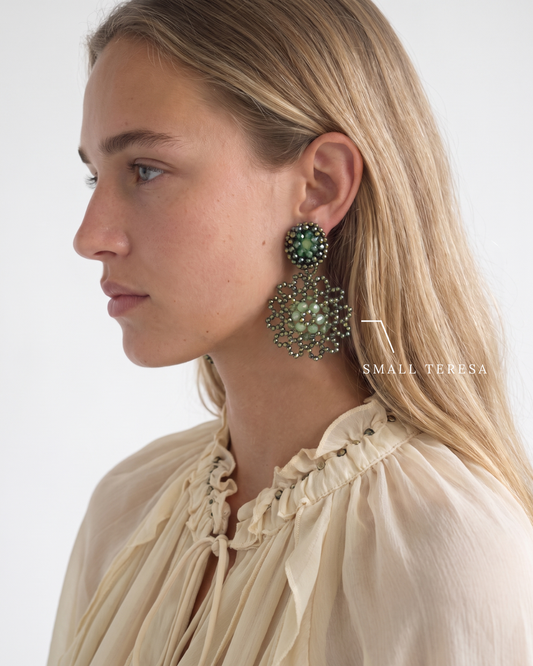
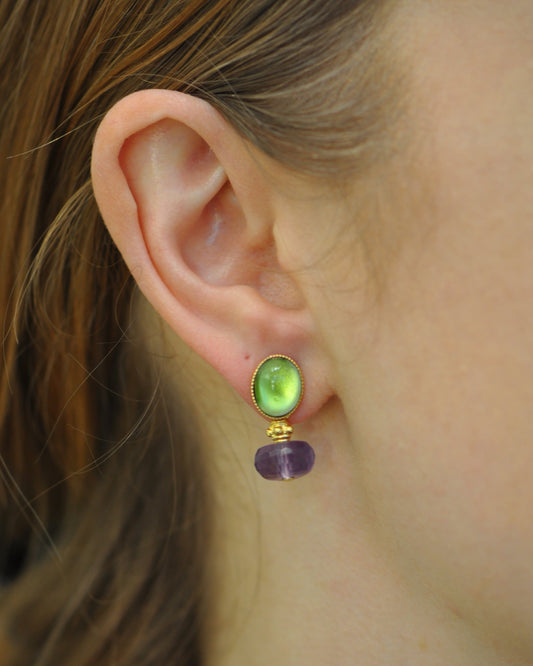
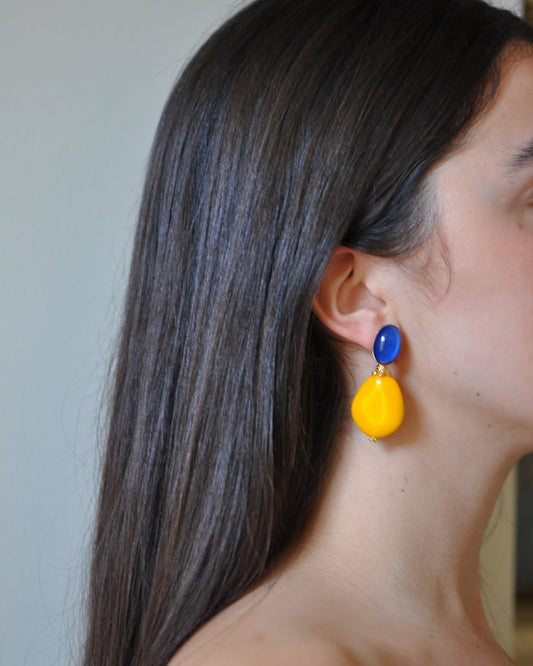
Scale is the decision most people find difficult. A larger, more sculptural earring suits a clean neckline and hair worn up, where there is room around the face for the piece to be seen properly. A more contained drop suits loose hair or a detailed outfit, where a larger piece would have to compete for attention.
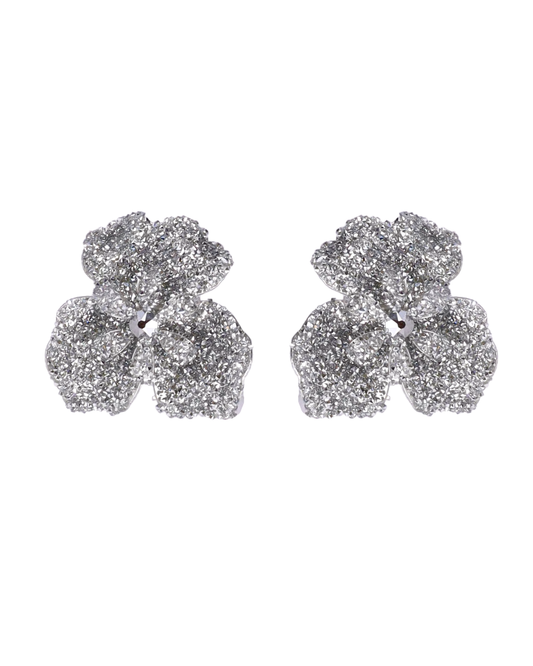
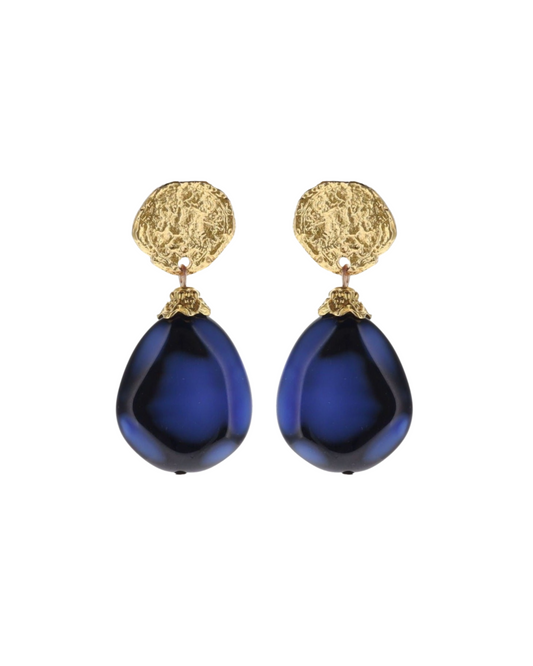
Laurence Coste statement earrings are handmade in limited quantities and set with semi-precious stones chosen individually, so you can be reasonably confident nobody else in the photographs is wearing the same pair.
Clip-On Earrings and Wearing Comfort
A great many women reach this occasion without pierced ears, or with lobes that no longer take weight as comfortably as they once did. The usual answer is a small selection of studs, which is a poor trade for a day like this one.
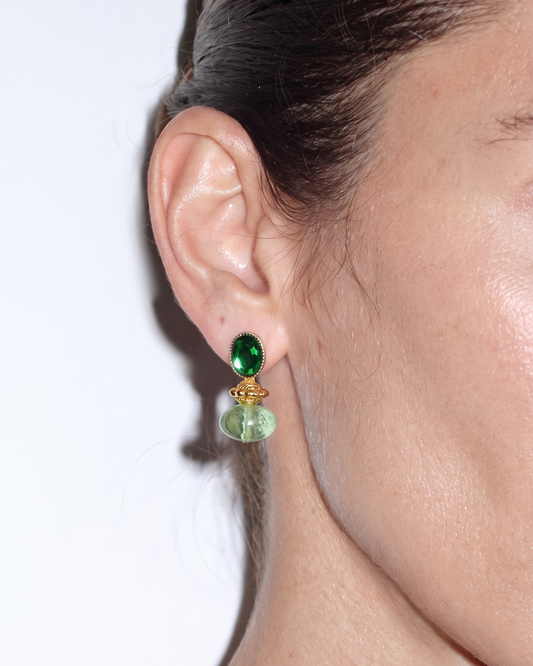
Every Laurence Coste earring style is available in both clip-on and pierced, so the choice comes down to what you actually want to wear rather than to what your ears will allow.
Two practical points are worth knowing. Try the piece on well before the day rather than on the morning itself, and give it long enough at home to see how it settles, since what makes clip-on earrings comfortable over a long day comes down to fit far more than to weight. Ask the boutique to adjust the fitting for you, since a clip that has been set to your ear behaves very differently from one straight out of the box.
A Necklace When the Neckline Allows
When the neckline gives you the space, a necklace can carry the entire look. Most of the work in choosing a statement necklace is deciding what it will sit against, since a piece that reads beautifully over plain silk will fight an embellished or beaded bodice.
One consideration is particular to this role. If you are wearing a jacket for the ceremony and removing it for the reception, the necklace has to work in both states, which is worth checking on the outfit rather than assuming.
Laurence Coste statement necklaces are set with semi-precious stones and scaled to hold their own in a photograph, so you can be confident the piece still reads as the centre of the outfit in the album rather than disappearing into the neckline.
Bracelets, Cuffs and Finishing Pieces
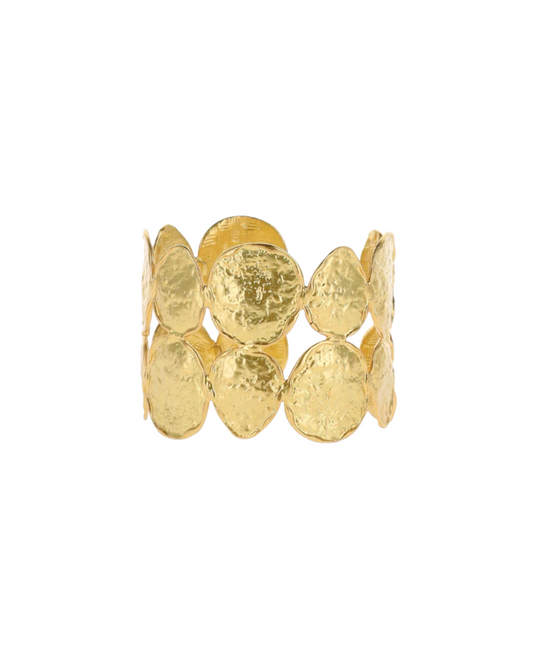
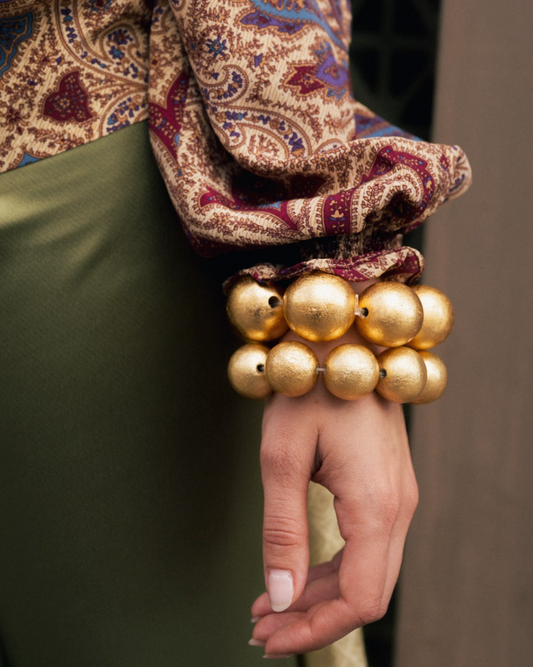
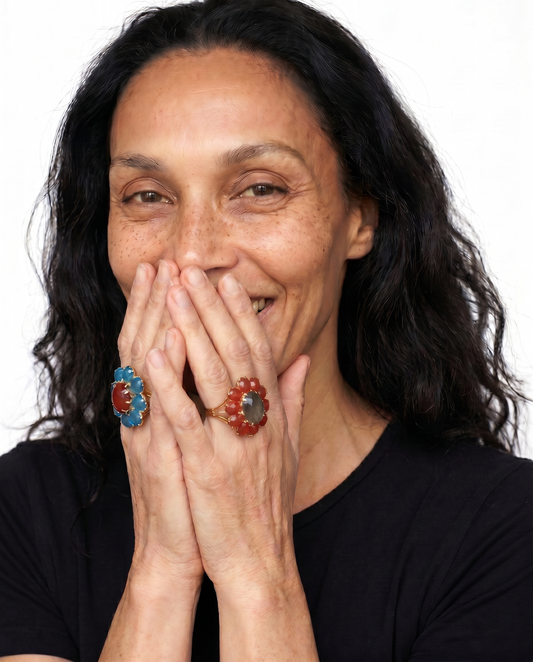
A bracelet or cuff earns its place most with sleeveless outfits and three-quarter sleeves. It is more visible in this role than most people expect, since the mother of the bride's hands are in shot constantly, in the receiving line and through the speeches. Avoid openwork settings with exposed edges, which catch on lace and chiffon every time you embrace someone.
Jewellery for the Mother of the Groom
The mother of the groom is not a supporting version of the mother of the bride, and it is worth saying so plainly, because a good deal of wedding advice treats her that way.
The practical latitude is real. Attention concentrates on the bride's side of the family, which means there is more room for colour and for a genuinely characterful piece without any risk of drawing focus where it should not be.
Coordination is the one consideration this role brings that the other does not. A short conversation ahead of the day settles the question, and the convention is to align on formality rather than on colour or piece type, so the two of you read as complementary in the photographs rather than as a matched pair.
Tradition holds that the mother of the groom takes her cue on formality once the mother of the bride's outfit is settled. Plenty of families still observe this and plenty no longer do, so treat it as a courtesy rather than a rule.
Everything above on necklines, stone colour and wearing comfort applies to mother of the groom jewellery without change.
Wearing an Heirloom or Sentimental Piece
Many women want to wear something inherited or gifted on the day, and it is often the most meaningful decision in the whole outfit.
Build the rest of the look around that piece rather than fitting it in at the end. If it is delicate, or the clasp is old, have it looked at well ahead of the day rather than discovering the problem in the morning.
Mistakes Worth Avoiding
Most of these come up in the boutiques repeatedly, and all of them are easier to avoid than to fix in the morning.
|
The Mistake |
What to Do Instead |
|
Leaving the jewellery until last, once the outfit, shoes and bag are already fixed |
Choose it once the outfit is settled but before the accessories are locked in, so you can build the rest of the look around a piece you actually want to wear |
|
Wearing an untested piece for the first time on the day itself |
Wear it at home for an evening a few weeks beforehand, which is when an awkward clasp or a heavy drop makes itself known |
|
Matching every piece into a single coordinated set, which reads as dated rather than curated |
Let one piece lead and keep the others quieter, which gives the look a focal point instead of a uniform |
|
Choosing scale for the mirror rather than for the camera |
Judge the piece at conversational distance rather than up close, since photographs flatten depth and a bold piece can read as modest in a group shot |
|
Heavy, plain white pearl pieces that sit close to the bride's register |
Coloured stones and more considered pearl designs avoid the problem entirely |
|
Overlooking clasp security on a day of constant movement and a great deal of embracing |
Have older fastenings looked at well ahead of time, since a wedding day is harder on a clasp than anything else in the calendar |
Seeing the Pieces in Person
Trying pieces against the actual outfit is the only reliable way to settle scale, colour and clip-on comfort, and it takes far less time than deliberating over photographs.
Laurence Coste has three London boutiques, in Chelsea, Sloane Square and Mayfair, each holding designs exclusive to that location. Visit her boutiques to try pieces against your outfit, or discover the collection online.
Frequently Asked Questions
What Jewellery Should the Mother of the Bride Wear?
One considered lead piece, most reliably a pair of statement earrings, chosen to complement the bridal party rather than match it. Let the neckline decide whether earrings or a necklace lead, choose stone colour against the outfit rather than to it, and try the pieces on well before the day.
What Are Good Jewellery Gifts for the Mother of the Bride?
Something she can wear on the day and keep wearing afterwards. Earrings are the most reliable choice, since they suit any neckline and do not depend on the outfit being finalised first. A piece set with her birthstone, or with a stone drawn from the wedding palette, gives it a connection to the day without making it purely commemorative.
Can the Mother of the Bride Wear Pearls?
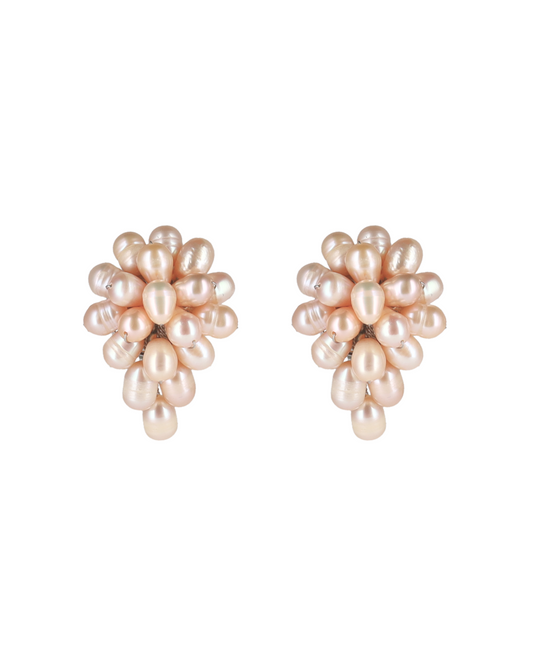
Yes. The consideration is scale and colour rather than the material itself. Large, plain white pearl pieces can read as bridal, while considered pearl designs and pearls set alongside coloured stones do not. Pearl is also the June birthstone, which makes it a natural choice for a summer wedding.
Should the Mother of the Bride and Mother of the Groom Coordinate Their Jewellery?
Not matching, but a brief conversation is worth having. The convention is to align on formality and register rather than on colour or piece type, which means you appear complementary in the photographs without looking as though you planned an identical look.
Can the Mother of the Bride Wear Coloured Stones?
Yes, and it is often the better choice. Coloured semi-precious stones sit clearly apart from bridal white, they photograph with more depth than plain polished metal, and they give the outfit a point of interest that does not depend on scale alone.
What Jewellery Should the Mother of the Bride Avoid?
Fully matched sets, untested pieces worn for the first time on the day, anything with a snagging setting or an uncertain clasp, and large plain white pearl pieces that read as bridal. Beyond those, most restrictions circulating online are preference presented as rules.