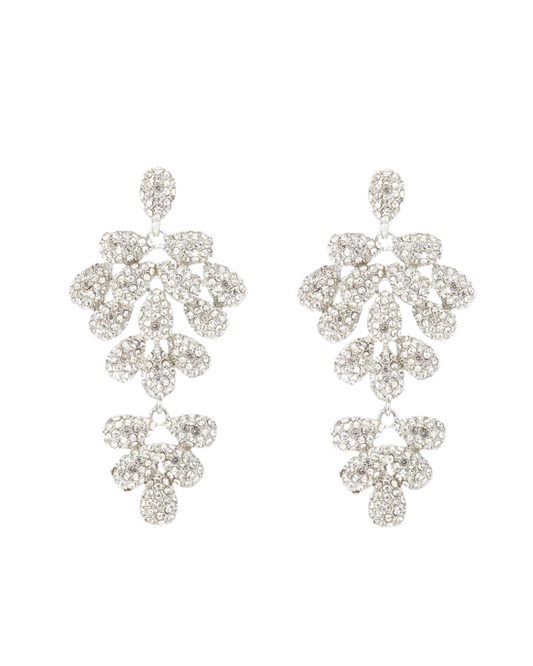
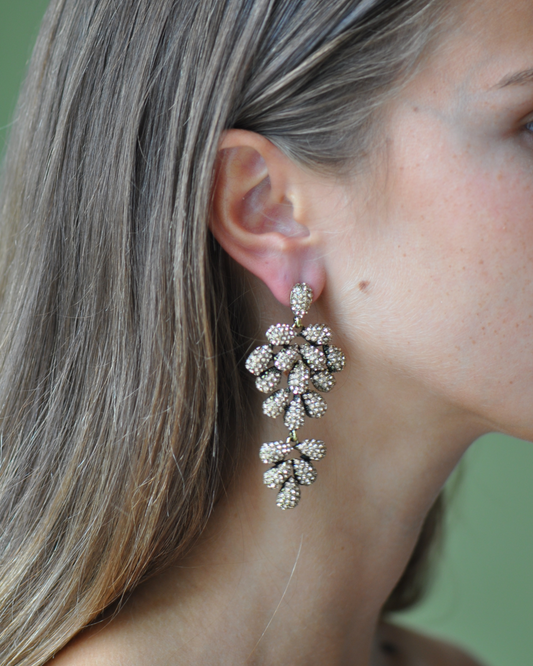

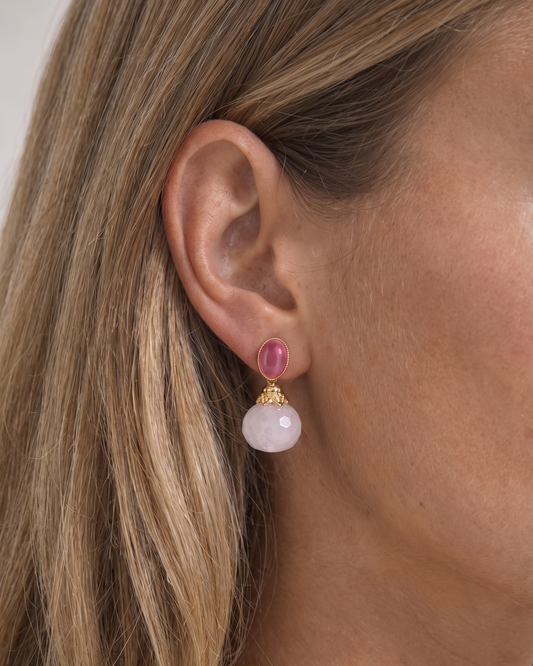
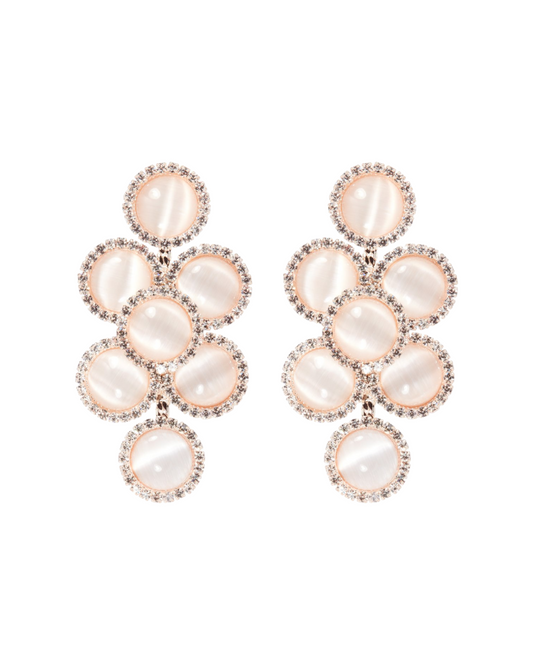




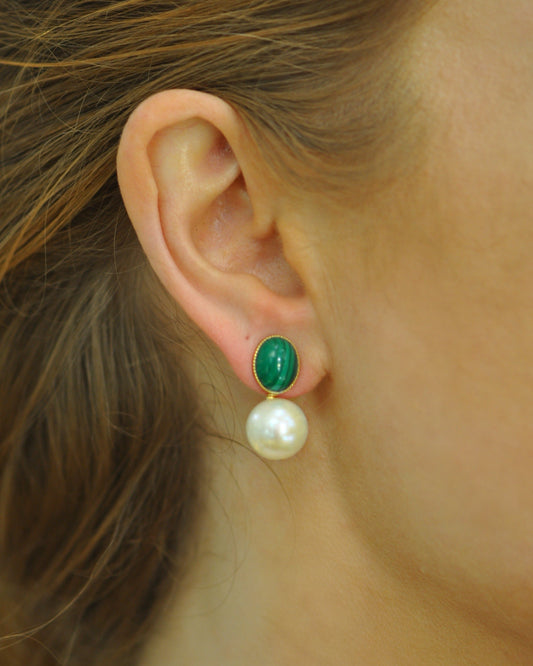
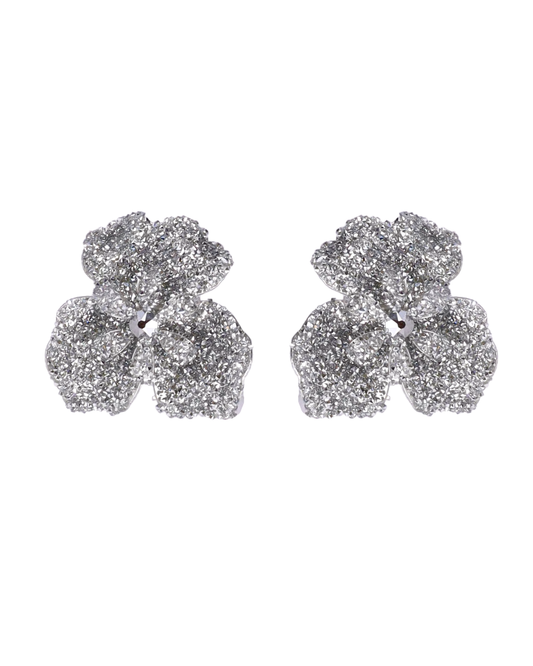
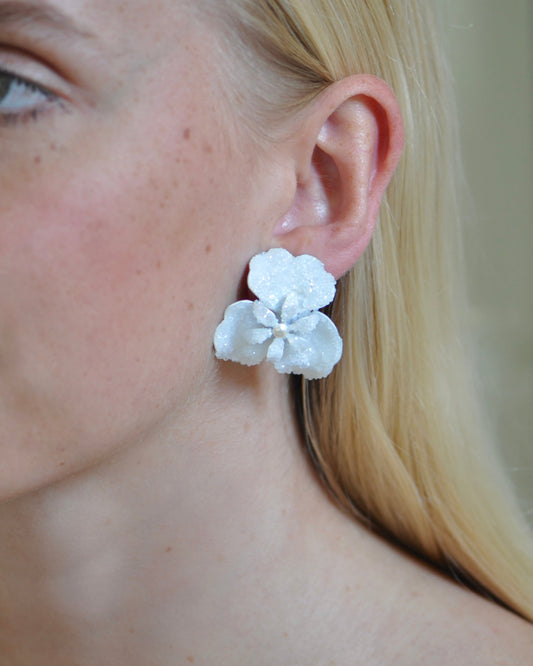
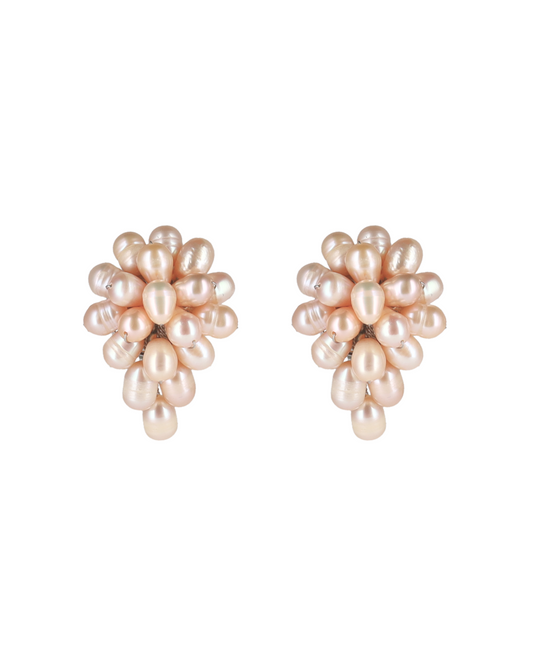
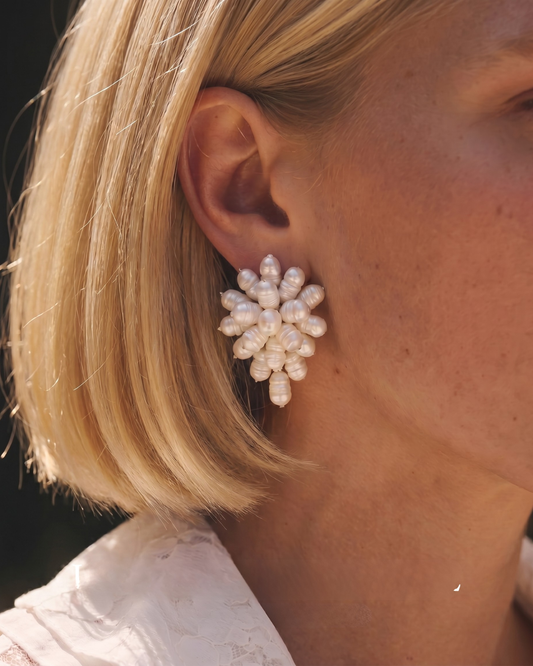
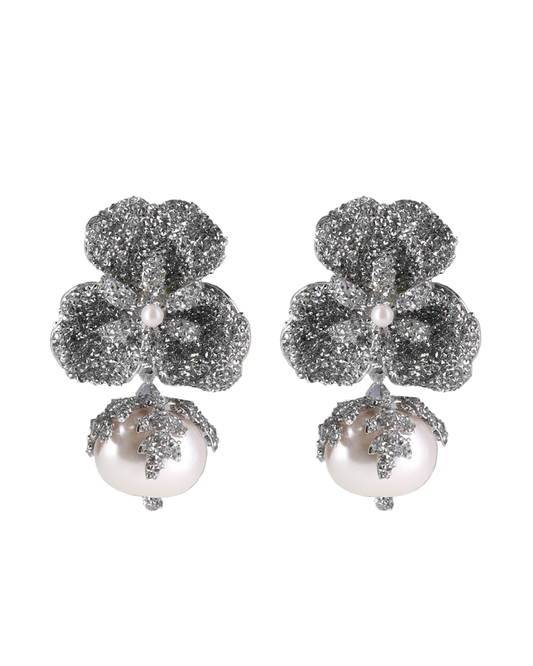
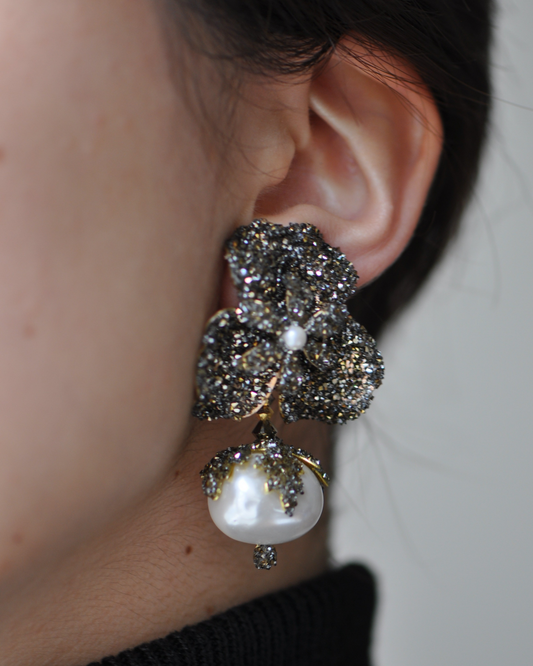
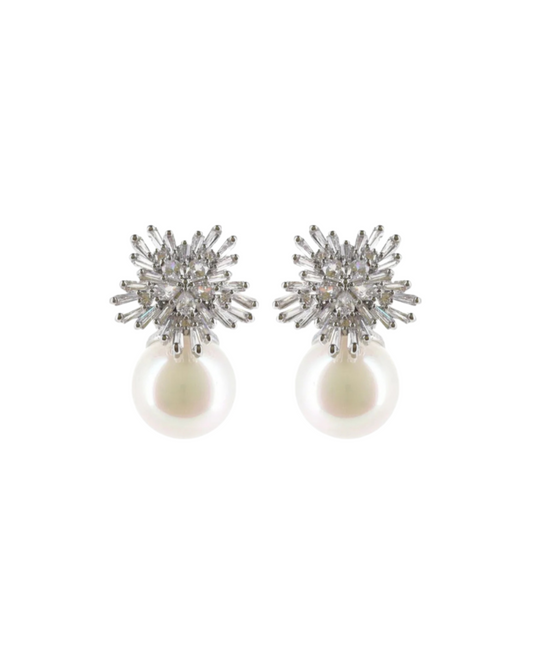
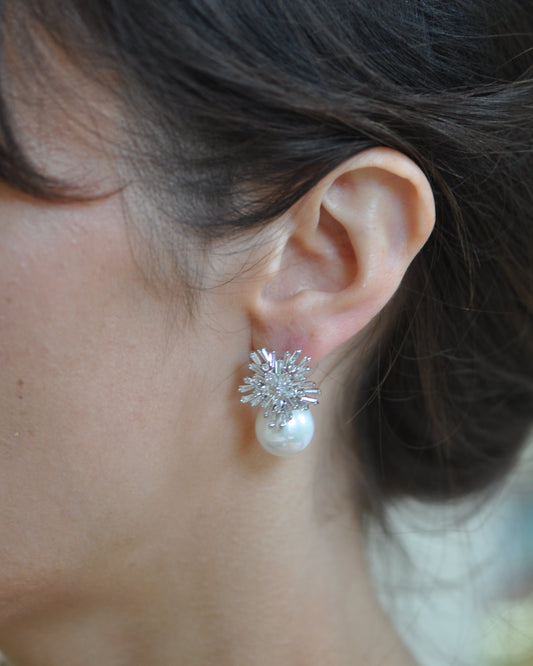
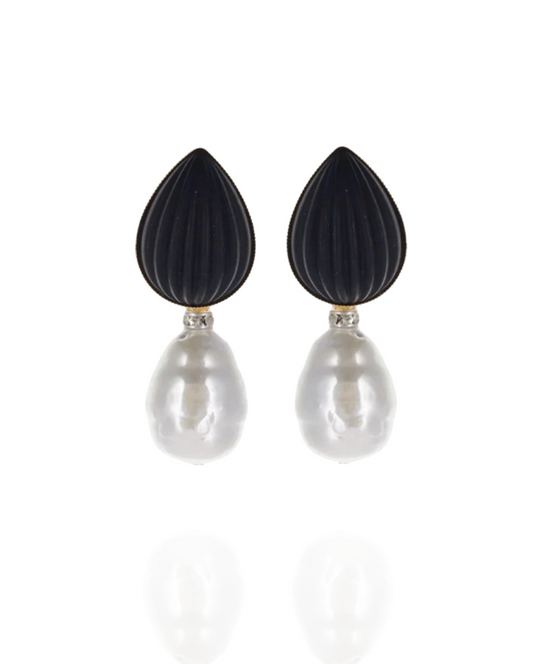

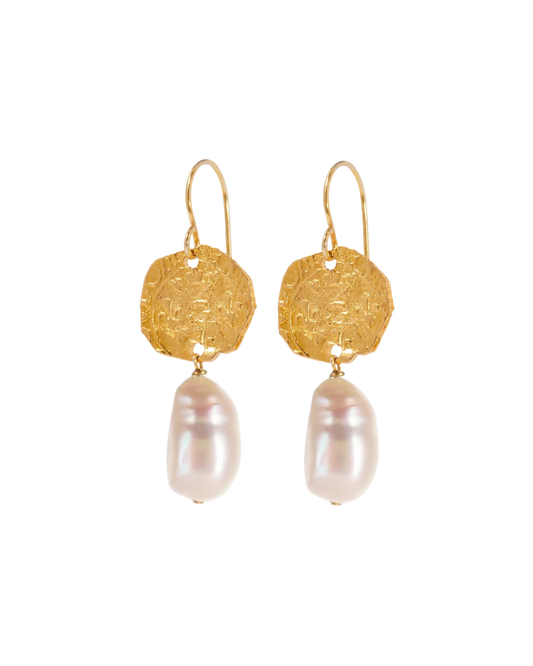
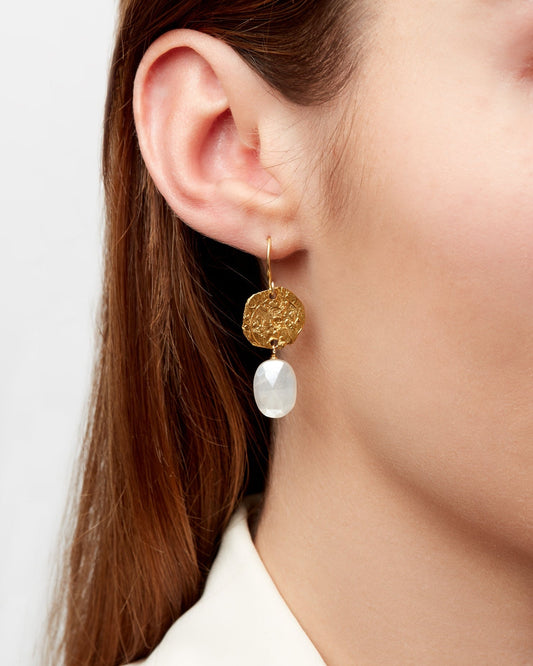
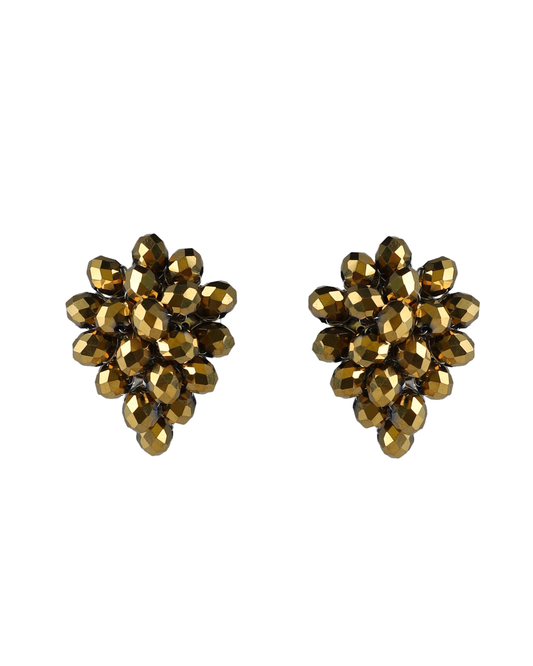
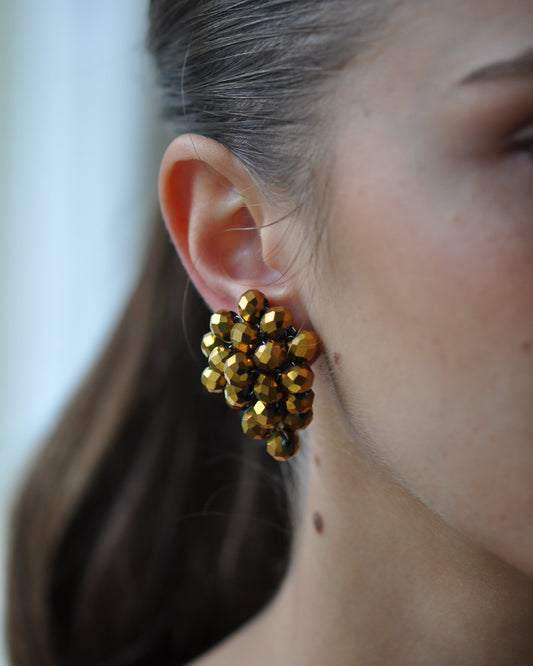
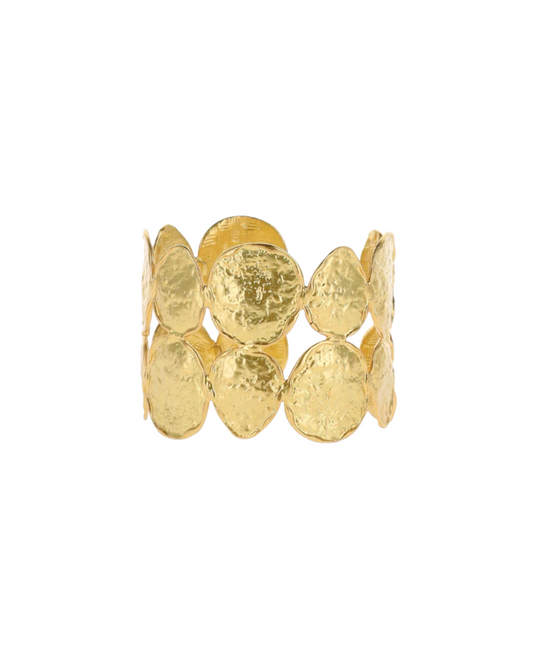

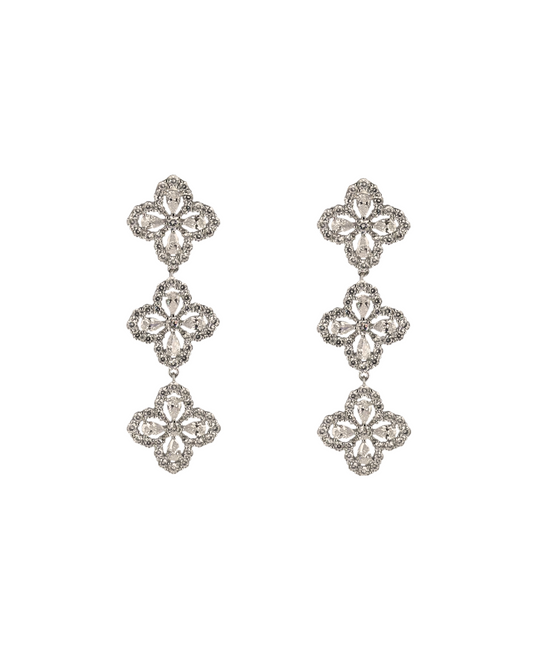
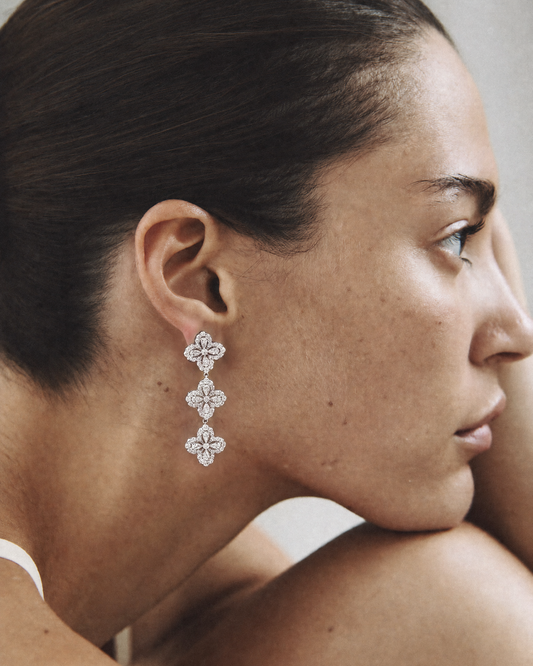
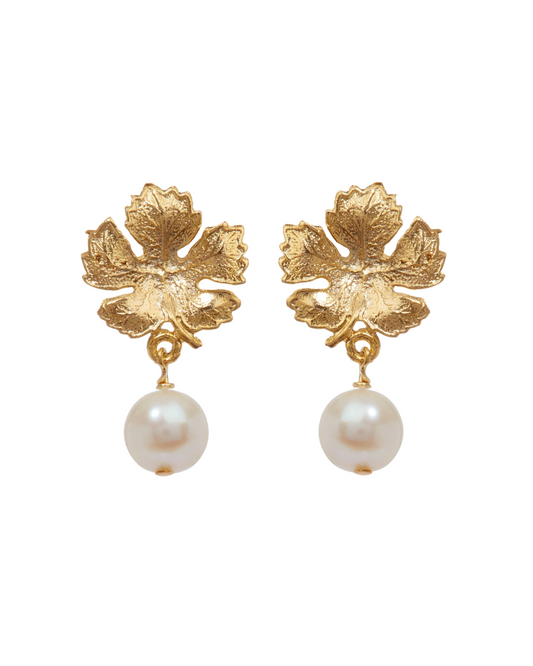
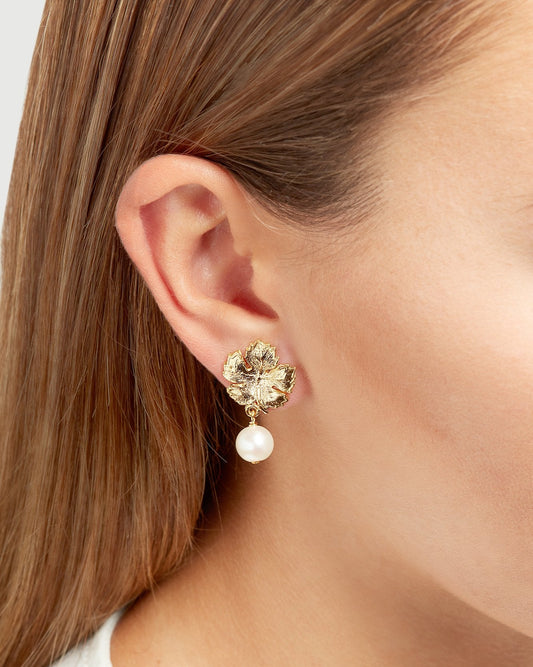

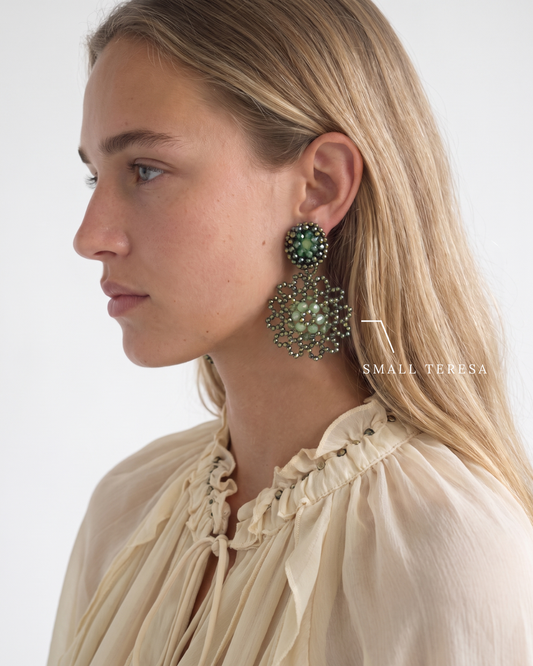
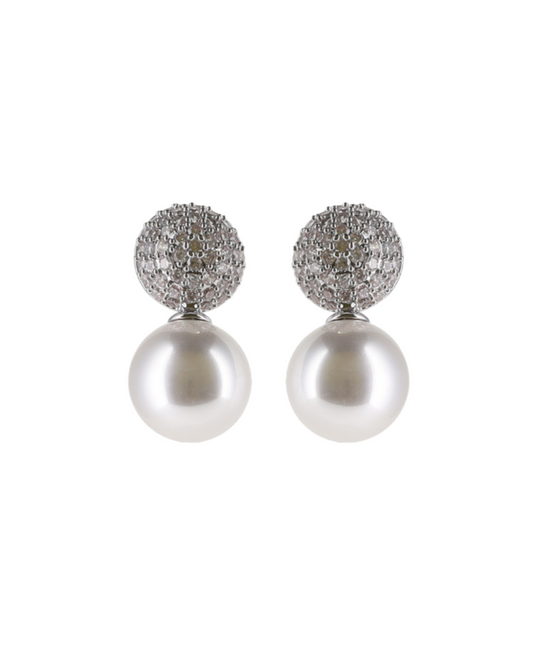
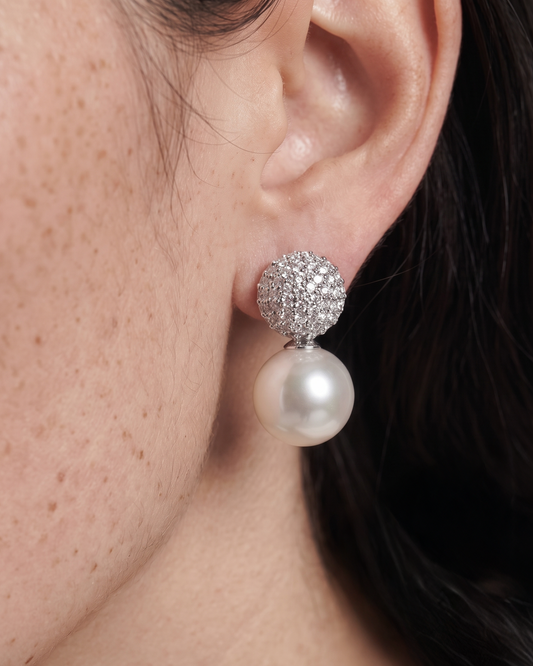
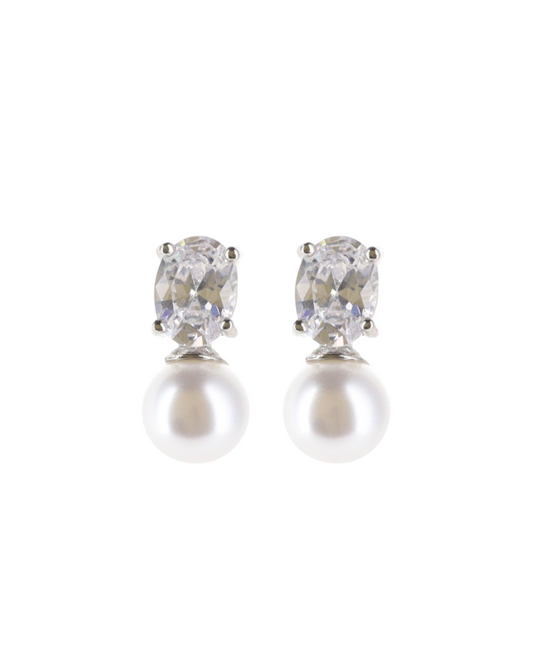
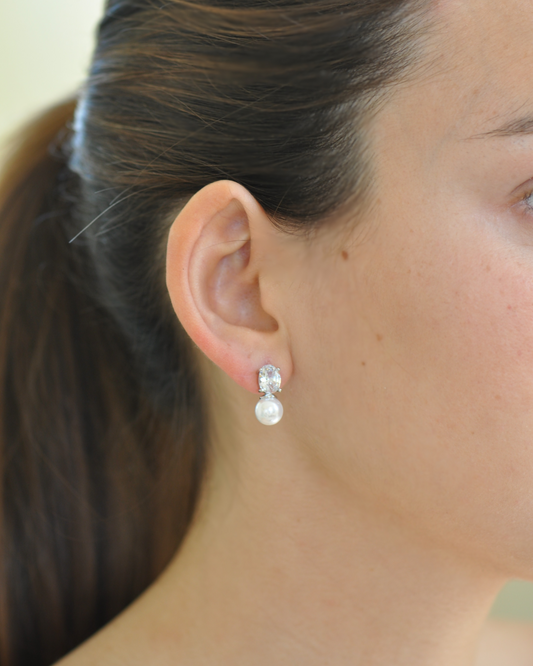
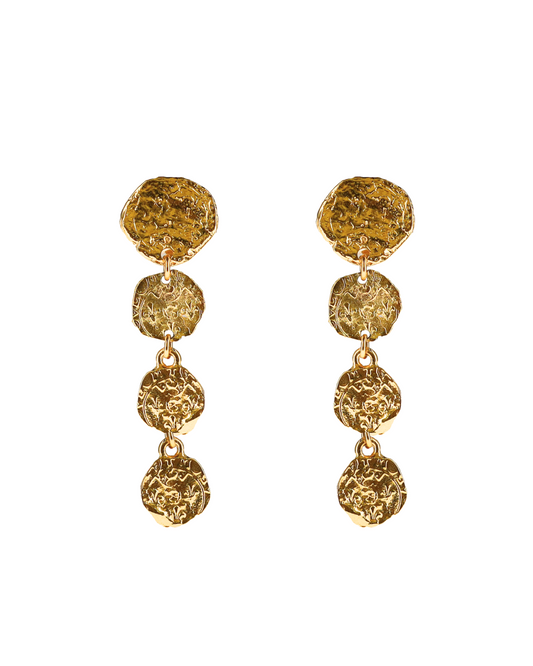
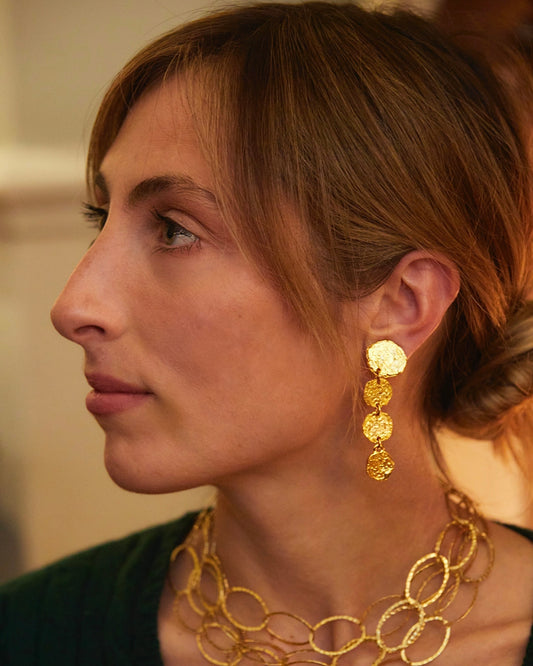
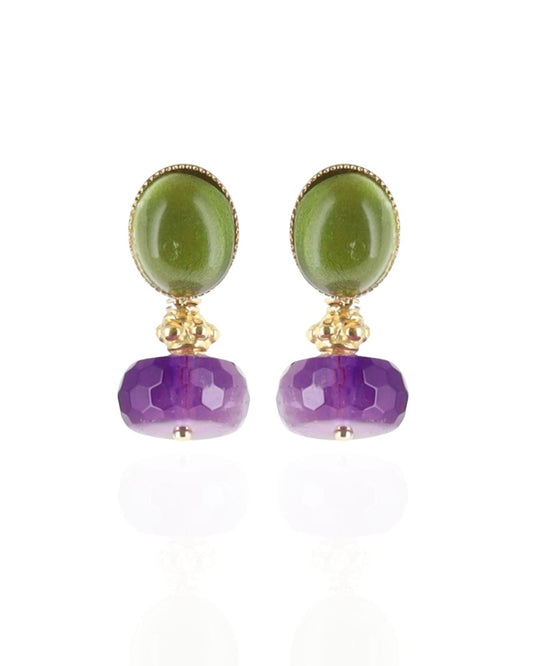
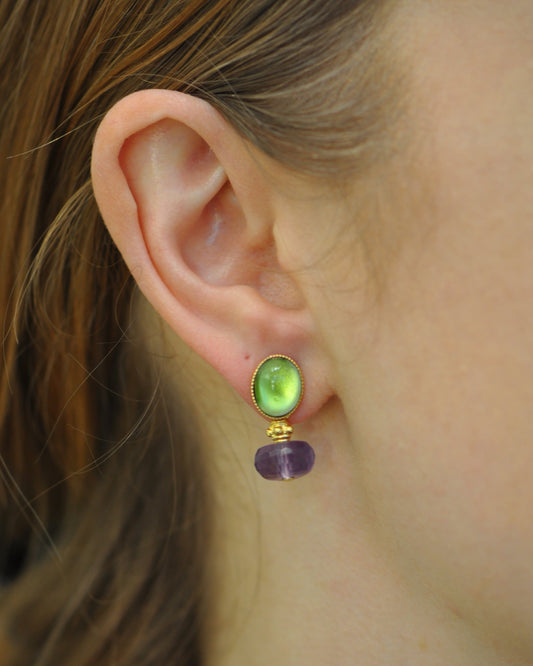
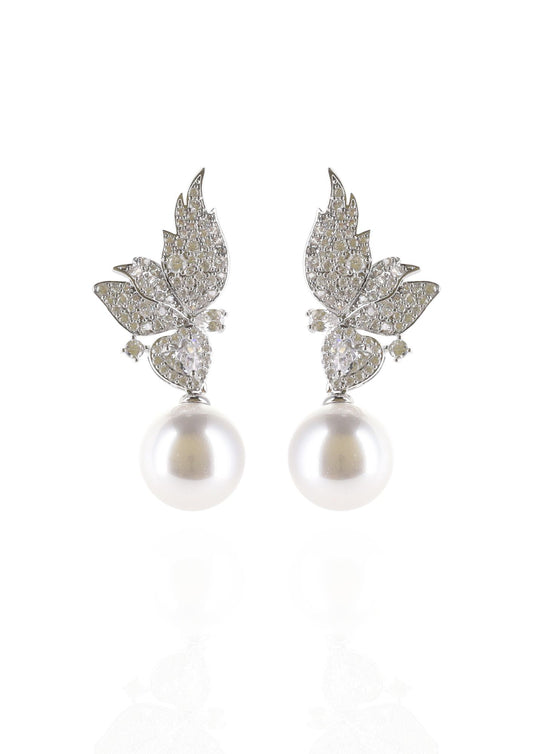

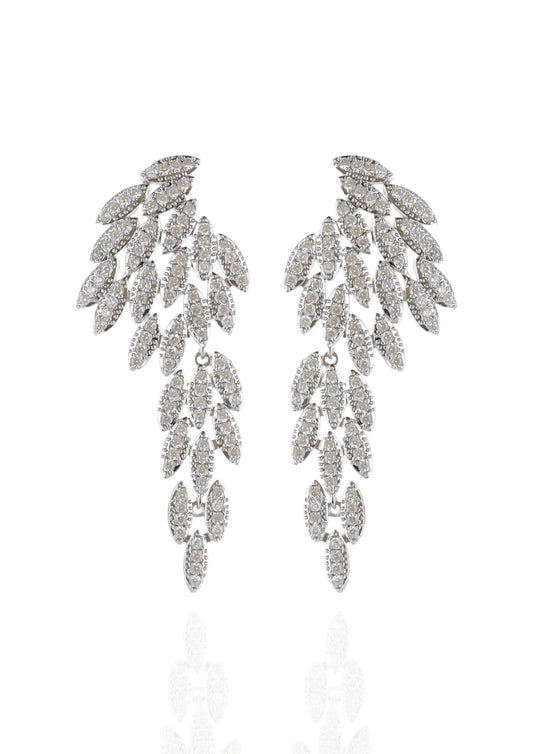
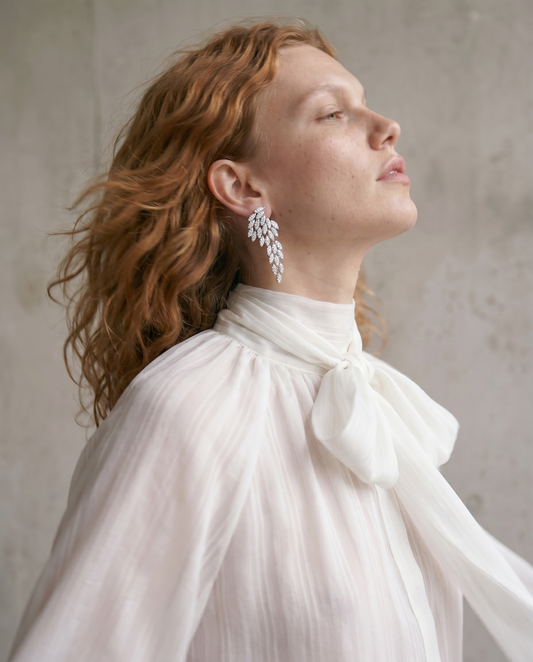


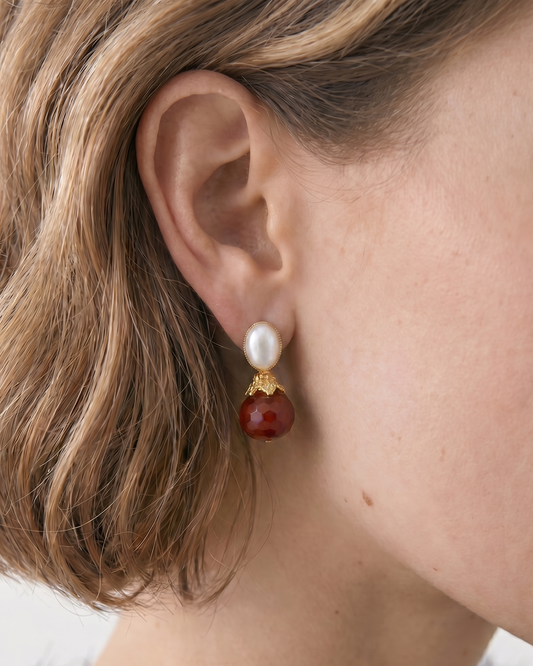
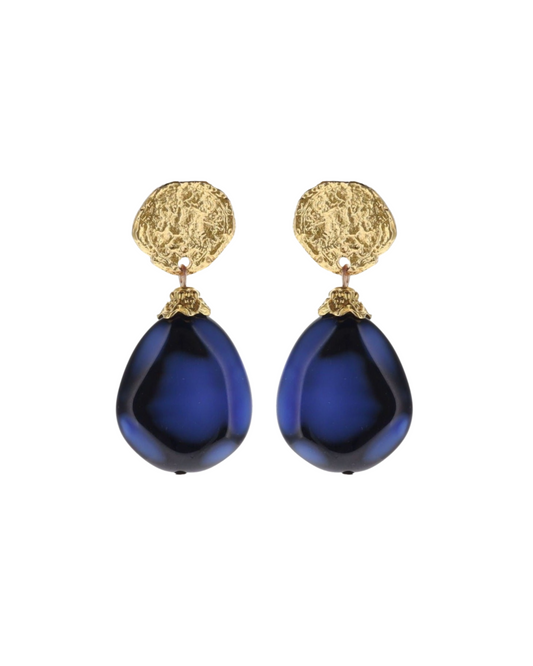

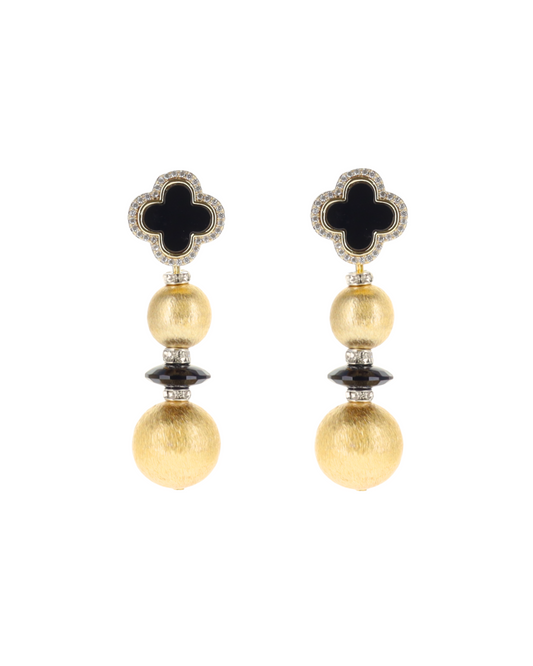
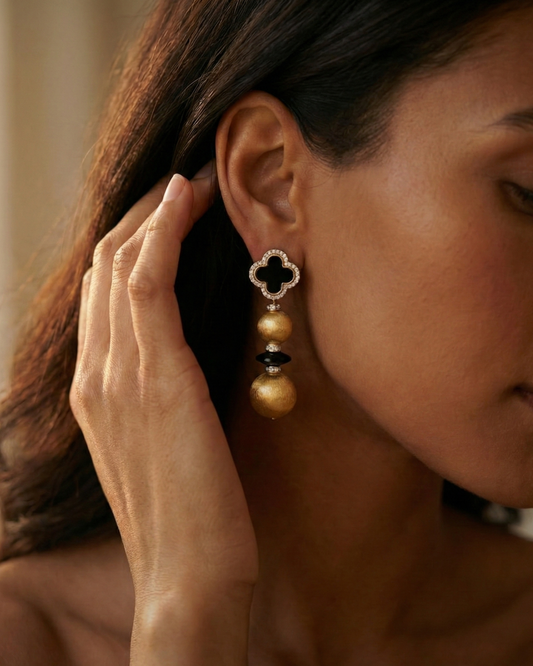




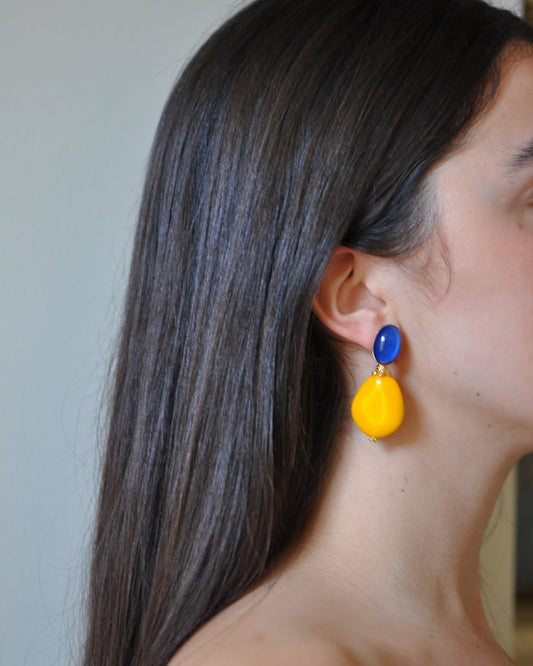


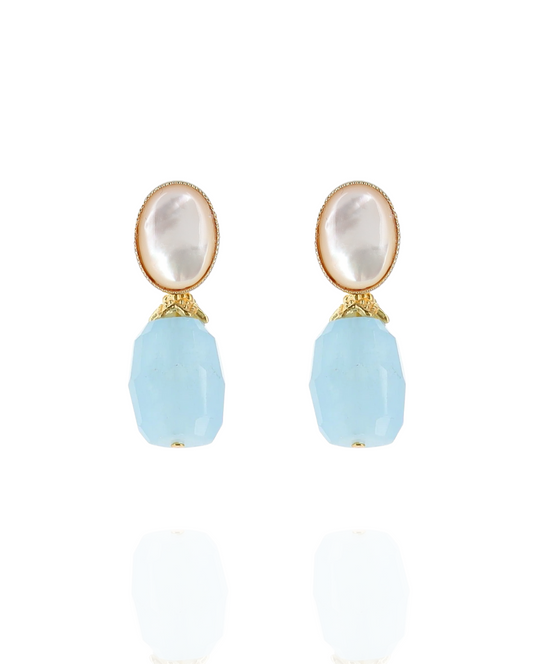
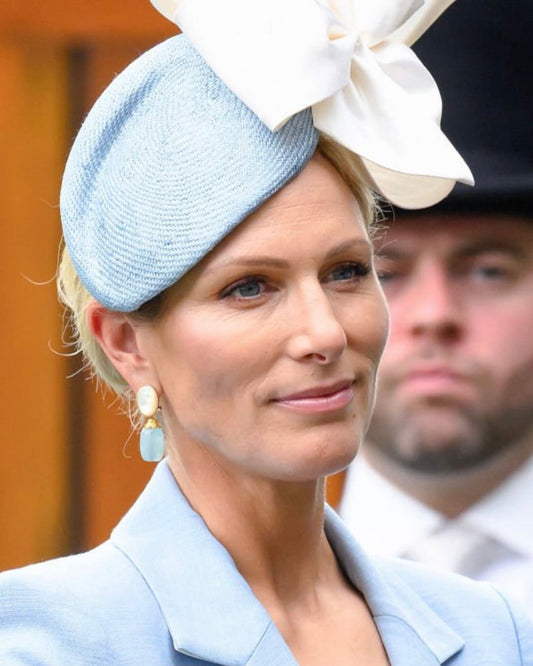

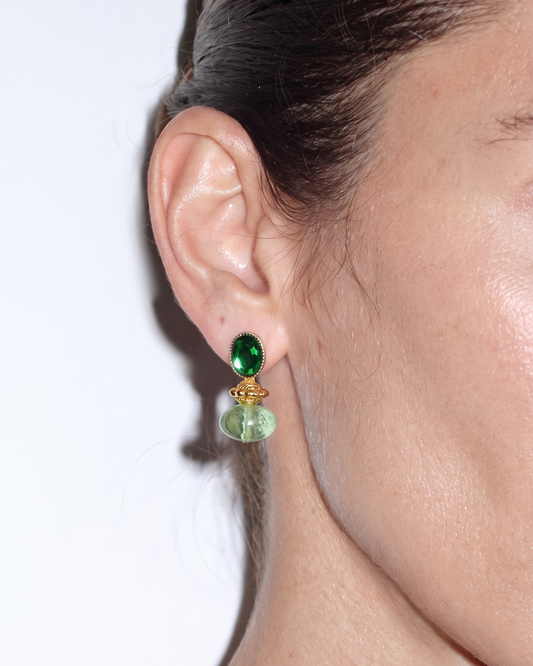


Clip-on earrings give you the look of statement earrings without a piercing, which means a sculptural drop or a bold, colourful stud is open to anyone, pierced ears or not. The catch is a familiar one. The wrong pair, or the right pair worn the wrong way, can pinch, throb, or slide loose by mid-afternoon.
Almost always, that discomfort comes down to fit and technique, and both are easy to put right. This guide explains why clip-on earrings hurt, how to wear them comfortably for longer, and how to choose pieces that stay comfortable on the ear. At Laurence Coste, statement pieces are made in both clip-on and pierced styles and fitted in person at the Chelsea, Sloane Square, and Mayfair boutiques, so the advice here is the same practical advice the team gives customers across the counter.
Why Do Clip-On Earrings Hurt?
If your clip-on earrings hurt, the earrings themselves are rarely the whole story. The pain usually traces back to one of a handful of fixable causes.
- Tension is set too tight. A clip calibrated tighter than your earlobe needs will press harder than it has to.
- A hard or small contact area. When the part of the clip that meets your ear is narrow or sharp-edged, all the pressure lands on one small spot.
- Weight. A heavier design forces the clip to grip more firmly to stay upright, so a bold piece can feel heavier on the lobe than a lighter one.
- Placement. Sit the clip too high or too low and it catches the thinner, more sensitive skin at the edges of the lobe rather than the cushioned middle.
- Wear time. New clip-on wearers often keep a pair on for hours straight before the ear has adjusted to the sensation of gentle pressure.
None of these means clip-ons have to be uncomfortable. Each one has a straightforward fix, which is where the rest of this guide comes in.
How Clip-On Earrings Work
A clip-on earring holds the lobe between a decorative front and a clip at the back, with no post through the ear. The mechanism doing the holding varies, and knowing which type you have makes adjusting them far easier.
|
Clip Type |
How It Works |
Comfort Note |
|
Hinge or spring back |
A spring-loaded clip snaps closed onto the lobe |
Quick to put on, with fixed pressure. Silicone pads help if it feels tight |
|
Screw back |
A small screw adjusts how tightly the clip grips |
The most adjustable option for comfort |
|
Paddle back |
A wider back pad presses against the lobe |
Spreads pressure over a larger area, though a hard pad can still dig in |
|
Magnetic |
Magnets hold the lobe between front and back |
Gentle, and best suited to lighter pieces |
Once you can identify your clip type, the fixes below become much more precise, because tightening a screw back is a different action from easing a hinge back.

How to Wear Clip-On Earrings Without Pain
This is the part that makes the difference. Here is how to wear clip-on earrings without pain, step by step.
- Adjust the tension to your own ear. On a screw back, turn the screw until the clip feels snug but never pinching. On a hinge or paddle back, the metal bracket can be eased very gently to widen the gap. Work in small movements and take your time, which means you avoid over-bending a delicate mechanism.
- Position them in the middle of the lobe. Pull your earlobe gently downward, slide the clip into the fleshiest central part, then release. Placing it centrally keeps the clip off the sensitive skin at the top and bottom edges, so you can wear it for longer in comfort.
- Add silicone comfort pads. Slip-on silicone or adhesive foam pads cushion the metal and spread the pressure across a wider area of the lobe. They make the biggest difference on designs with a small or hard clip surface, which means a pair you love but find a little sharp can become genuinely wearable.
- Build up your wear time. If you are new to clip-ons, start with shorter stretches of an hour or two and increase gradually, so the lobe grows used to the gentle pressure rather than being asked to tolerate it all day at once.
-
Match the weight to the occasion. Save your boldest, heaviest pieces for shorter events and reach for lighter designs on the days you will be wearing earrings from morning to evening, which is exactly the calculation behind jewellery for the mother of the bride on a full wedding day. A lighter piece puts less strain on both the clip and your lobe.
How to Choose Clip-On Earrings That Stay Comfortable
Fixing a difficult pair is one thing. Choosing well in the first place is better. A few features separate clip-ons that stay comfortable from the ones that end up back in the drawer.
- A smooth, rounded, reasonably wide clip surface, which distributes weight evenly rather than concentrating it.
- Considered weight, where the design feels balanced on the ear rather than simply large.
- A lighter decorative piece, since less weight means the clip does not have to grip as hard to hold its position.
- Pieces designed to be worn rather than only admired, ideally tried on and fitted in person before you commit.
This last point is where buying from a boutique earns its place. At Laurence Coste, clip-on pieces can be tried on and adjusted in person at the Chelsea, Sloane Square, and Mayfair boutiques, which means comfort is checked against your own ear before you take a pair home rather than left to guesswork, and the fitting fits easily into a wider day out around Sloane Square.
Who Clip-On Earrings Are For
Clip-on earrings are often thought of as a fallback for unpierced ears, but the people who reach for them are far more varied than that. They are worth considering if you fall into any of these groups.
- You have never had your ears pierced, or would rather not. Clip-ons let you wear statement earrings with no piercing needed, so the decision is about style rather than commitment.
- Your skin reacts easily. Sensitive or reactive ears do better when the metal touching the skin is gentle. Laurence Coste pieces are built on a non-allergenic sterling silver base, and a silicone comfort pad adds a further barrier between metal and skin.
- Your piercings have stretched or your lobes have softened over time. Lobes naturally change with age, and older piercings can widen or sag, which makes pierced earrings sit awkwardly. A well-fitted clip-on rests on the lobe rather than hanging from a hole, so it can sit more comfortably.
- You want to switch styles often. Wearing different pieces through the day or the week is simpler with no piercings to think about.
- You are giving earrings as a gift. Clip-ons suit a recipient whose piercing status you may not know, which makes them a thoughtful and safe choice.
The common thread is choice. Clip-on earrings open up bold, expressive pieces to anyone, on their own terms.

Frequently Asked Questions
How Do You Make Clip-On Earrings Not Hurt?
Adjust the clip tension so it grips gently rather than tightly, position the earring in the middle of your lobe rather than the edge, and add a silicone or foam comfort pad to cushion the metal. Choosing lighter pieces and building up your wear time gradually both help too.
Is It Normal for Clip-On Earrings to Hurt?
A little pressure is normal at first, especially if you are new to clip-ons, and it usually eases as your lobe adjusts. Ongoing pain is a sign the fit needs attention rather than a sign that clip-ons are not for you. Adjust the tension, reposition the earring, or add a pad before giving up on a pair.
Why Do My Clip-On Earrings Hurt So Much?
The most common reasons are tension set too tight, a design that is too heavy for long wear, or placement on the thinner skin at the top or bottom of the lobe. Working through those three in turn resolves most discomfort.
Can You Wear Clip-On Earrings All Day?
Yes, provided the fit and weight suit you. Lighter designs and a well-adjusted clip make all-day wear realistic, and building up your wear time over a few outings helps your ears adapt to a new pair. This makes clip-ons a practical choice for long occasions, including wearing statement earrings to a wedding.
What Earrings Are Good for Sensitive Ears or a Nickel Allergy?
Look for a non-allergenic sterling silver base rather than unmarked costume metals, choose lightweight designs with a smooth, wide clip surface, and use silicone pads to add a barrier between the metal and your skin.
Can Heavy Earrings Feel Uncomfortable Over Time?
Heavier pieces ask the clip to grip more firmly, which can make the lobe feel tired or tender after extended wear. If you love a bolder design, save it for shorter occasions and keep lighter pieces for longer days. Anyone experiencing genuine or recurring pain should speak to a medical professional.