






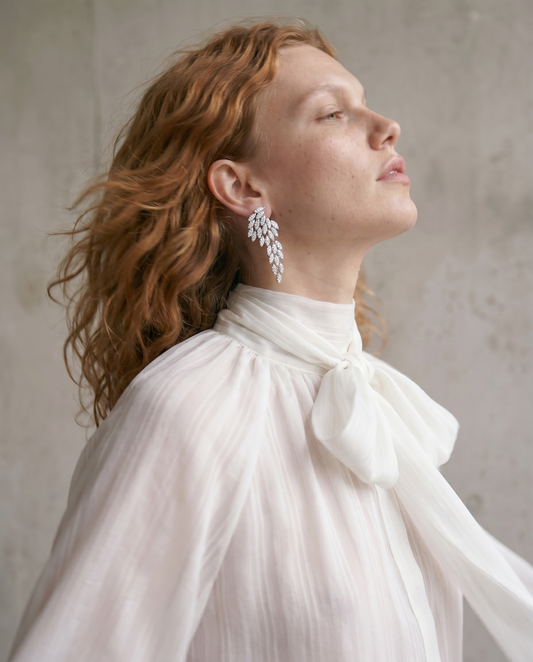

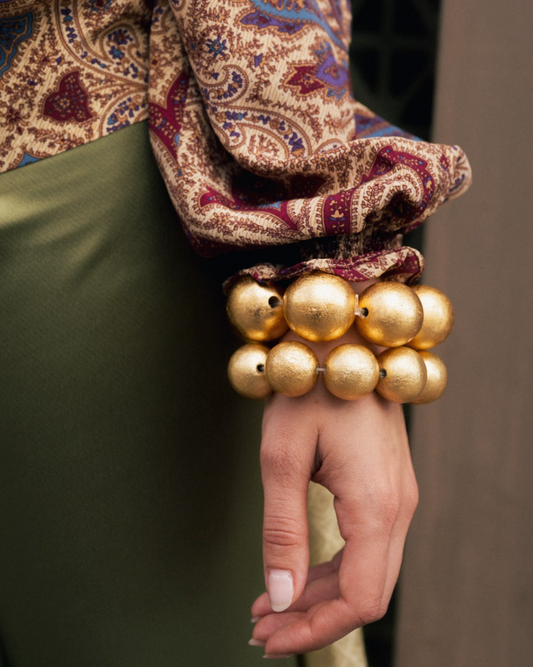

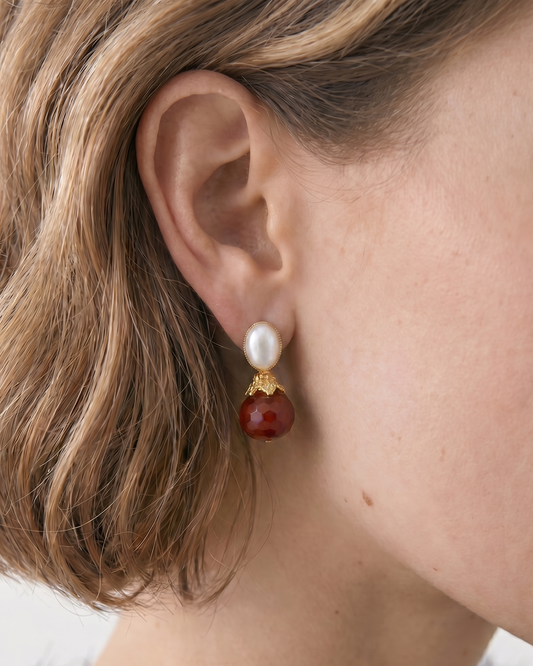
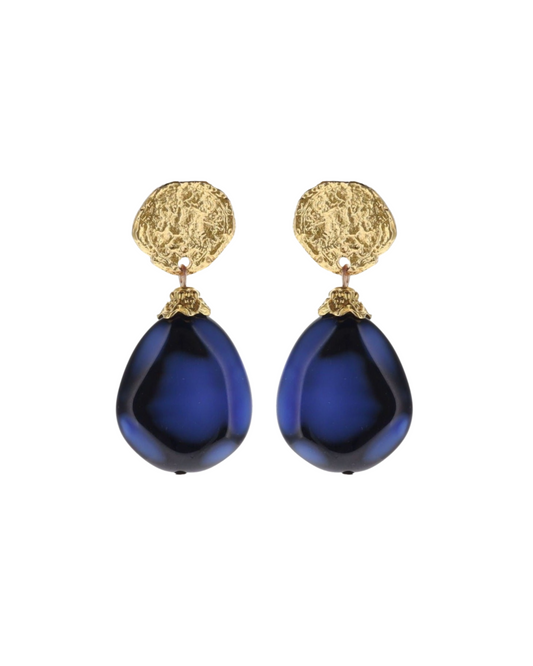







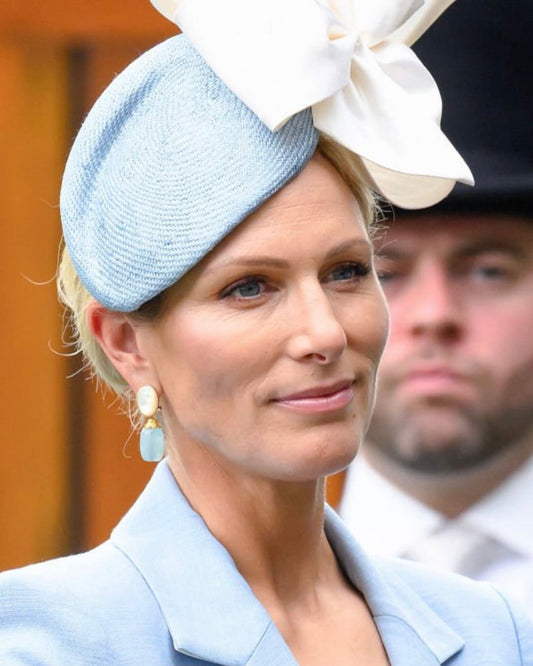

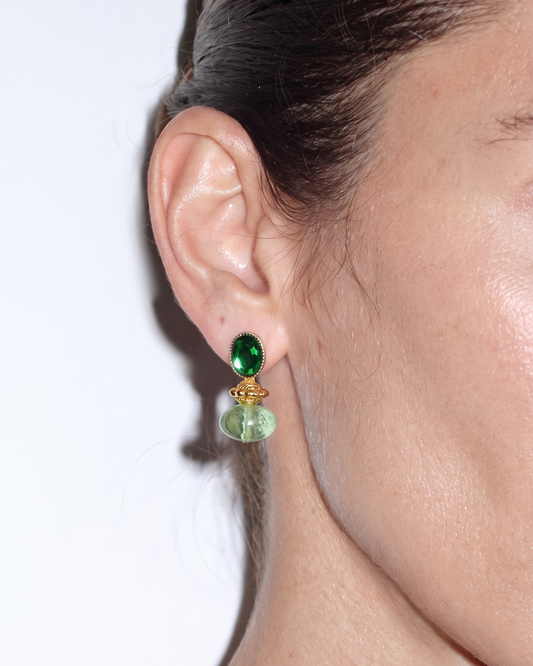


A statement necklace is the most expressive piece in a woman's jewellery wardrobe, and at Laurence Coste we believe every woman should own at least one. A delicate chain has its place, a pair of studs has its place, but a statement piece does something neither can do: it shifts the entire register of an outfit. It turns a plain shirt into something considered, a tailored blazer into something distinct, an evening dress into something unforgettable. One piece, worn well, can carry a woman through a working week, a wedding, a private view, and a dinner without ever feeling repeated.
What Defines a Necklace as a Statement Piece?
A statement necklace is, by definition, the focal point of an outfit. Not a supporting accent, not a quiet pendant worn close to the skin, but a piece designed to be the first thing someone notices.
Three qualities tend to define a true statement piece:
- Scale. Substantial in width, length, or visual weight. A piece that fills the décolleté rather than disappearing into it.
- Material. Bold use of semi-precious stones, vibrant colour, or sculptural metalwork. Turquoise, malachite, lapis, coral, freshwater pearls, all set with intention.
- Presence. Designed to be seen and to hold its own. Not a piece that needs layering to earn attention.
Within the category, there is a real variety. Chunky beaded multi-strand pieces sit at one end. Sculptural collars and bib styles are another. Single bold pendants on substantial chains occupy a middle ground. The Laurence Coste statement necklace collection sits at the more artful, considered end of this spectrum: each piece is handmade in London, in limited quantities, with stones chosen by Laurence herself.
How to Choose a Statement Necklace That Suits You
Choosing a statement necklace is a question of proportion, colour, and intention. The best piece is rarely the one that surprises you. It is the one that feels like an extension of how you already dress, but made bolder.
Consider Your Neckline
The neckline of the top or dress you most often wear is the single most important factor in choosing a statement necklace. The shape of the neckline dictates how the necklace will sit, where the eye is drawn, and whether the look reads as balanced or busy.
|
Neckline |
Best Statement Style |
|
V-neck or scoop |
Pendant or shorter beaded piece that mirrors the V |
|
Crew or round neck |
Bib-style or chunky collar sitting above the fabric |
|
High neck or turtleneck |
Longer beaded strands or a sculptural piece that falls mid-chest |
|
Strapless or off-the-shoulder |
Choker or wide collar to frame the collarbones |
|
Boat neck |
Mid-length pendant or beaded piece that draws the eye centrally |
|
Button-down shirt |
Worn over a buttoned collar, or against skin with the top button open |
The principle behind the table is consistent: match the shape of the necklace to the shape of the neckline, and let the length serve the proportion rather than fight it.
Think About Face Shape
Face shape is guidance, not law. The intent is balance, not a corrective.
- Oval. Most lengths and shapes work well. There is little you cannot wear.
- Round. Longer pieces with a vertical drop add length and definition. Avoid very short chokers that echo the curve of the face.
- Heart. Collar and princess lengths (14 to 18 inches) balance a narrower chin and add fullness to the throat.
- Oblong or rectangular. Shorter, rounder pieces broaden and soften. Skip very long, thin chains.
- Square. Softer, curved designs balance angularity. A rounded collar or beaded piece works particularly well.
The goal is not to disguise your features but to let the necklace echo or counterpoint them in a way that feels intentional.
Match the Material to the Mood
The material of a statement necklace shapes the emotional character of the piece more than any other variable. A turquoise statement necklace and a pearl statement necklace tell very different stories, even at the same length.
- Turquoise statement necklace. Vivid, summery, holiday-ready. Looks particularly striking against linen, white cotton, and warm skin tones.
- Pearl statement necklace. Classical, refined, occasion-friendly. Works for weddings, races, and evenings without ever feeling fussy, and it is a natural starting point for the mother of the bride.
- Gold statement necklace. Warm, festive, flattering against most skin tones. At Laurence Coste, gold means gold-plated sterling silver, which gives the warmth of gold with the strength and ethical sourcing of a sterling base.
- Silver statement necklace. Cool, modern, sharp. Pairs especially well with charcoal, navy, and white.
- Mixed semi-precious stones. Artful, expressive, one-of-a-kind. The most editorial choice, and the most distinctive.
This is also where chunky statement necklaces and big bold chunky necklaces tend to come into their own. The weight of the stone or bead determines the weight of the visual moment.
Choose a Statement Necklace for Frequency, Not Occasion
The most useful piece in any jewellery wardrobe is the one you reach for repeatedly, not the one saved for a single event. A showstopper has its place, but the statement necklace that earns its cost is the one that suits a dinner, a private view, a wedding, and a Tuesday morning equally.
The Laurence Coste collection is built around this idea. Pieces range from around £170 for the most accessible designs up into the showstoppers and bespoke creations, with the most-loved everyday-statement pieces sitting comfortably in the core range. The aim is bold enough to feel distinct, considered enough to wear often.

How to Style a Statement Necklace
A statement necklace earns its name by being the focal point. Every other styling decision should flow from that one fact. The outfit is the backdrop. The piece is the painting.
Build the Outfit Around the Piece
A statement necklace works best against a quiet canvas. That means simpler colours, cleaner lines, and a deliberate restraint elsewhere.
Fashion editors often reference the 2-1-1 rule as a guideline for balanced accessorising: one focal piece, two supporting smaller pieces, and one wrist or neck accent for finish. The principle is useful as a starting point, not a formula. For a statement necklace look, the necklace is almost always the "one."
A few combinations that consistently work:
- A crisp white linen shirt with a vivid beaded piece
- A black knit with a sculptural collar
- A tailored blazer over a plain tee, with a bib-style necklace beneath
- A simple slip dress in a single colour, paired with a multi-strand turquoise or pearl piece
The clothing does not need to be expensive. It needs to be quiet.
Pair with Restraint, Not Absence
A statement necklace does not ask for bare skin elsewhere. It asks for supporting jewellery that knows its place.
Recommended pairings:
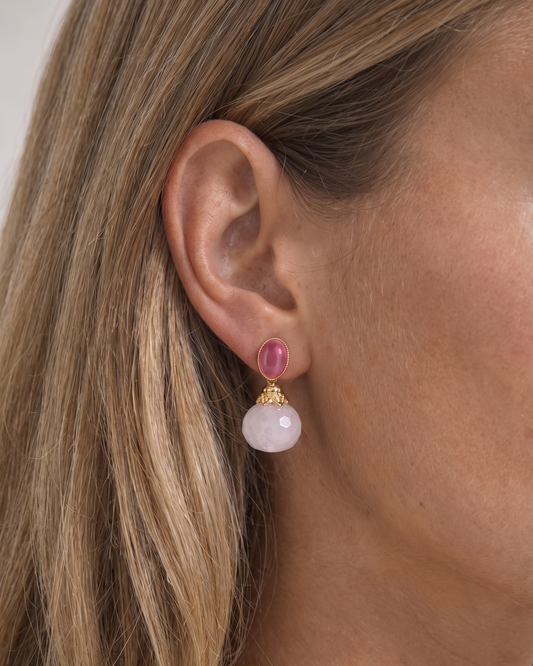
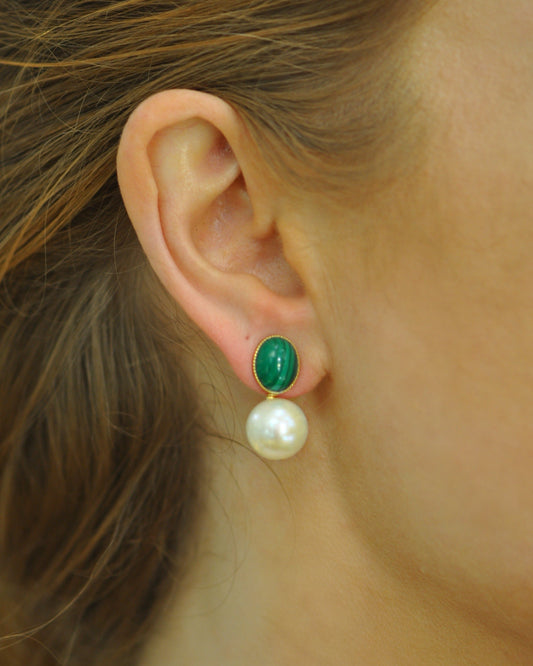
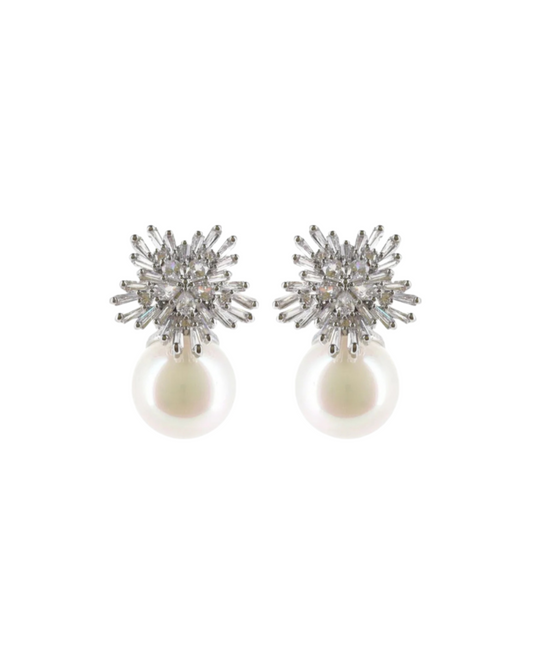
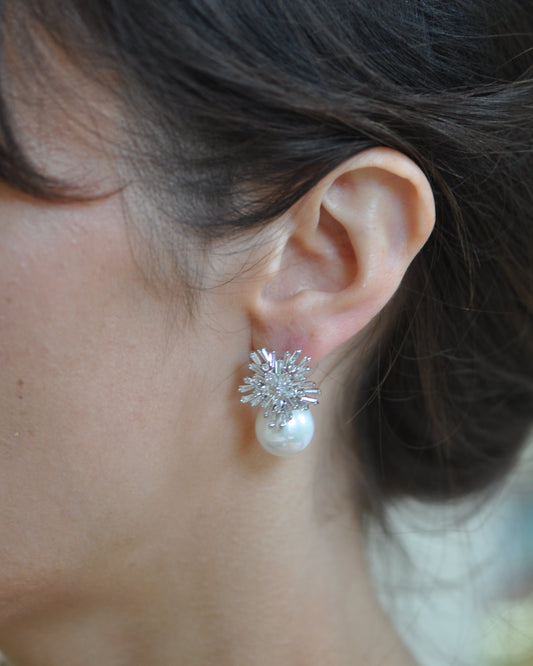
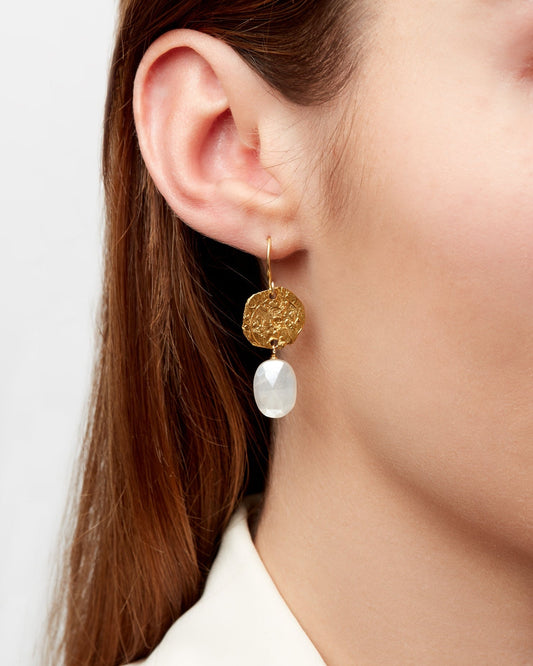
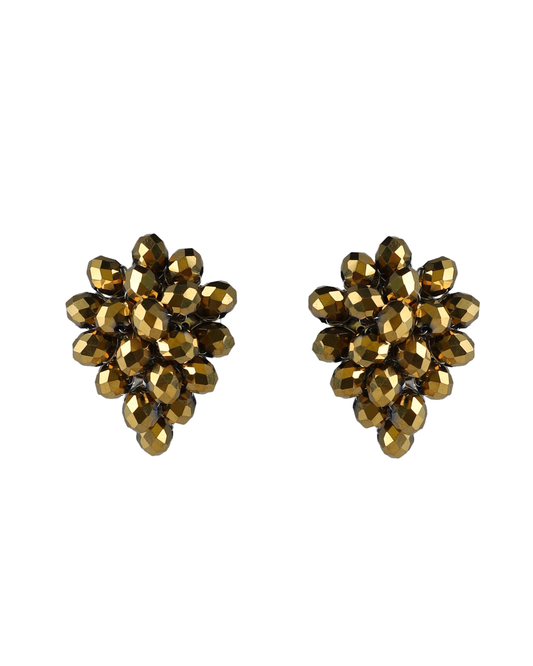
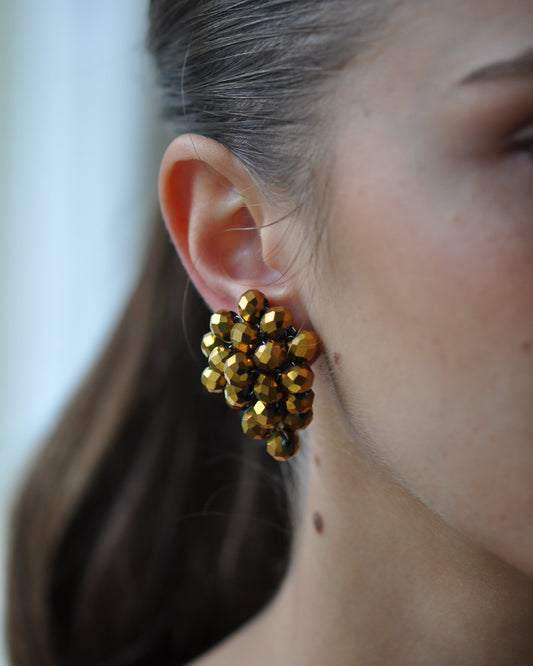
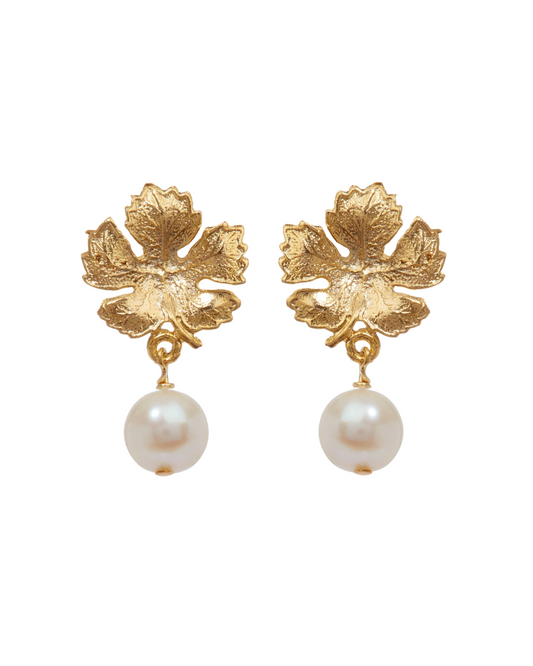
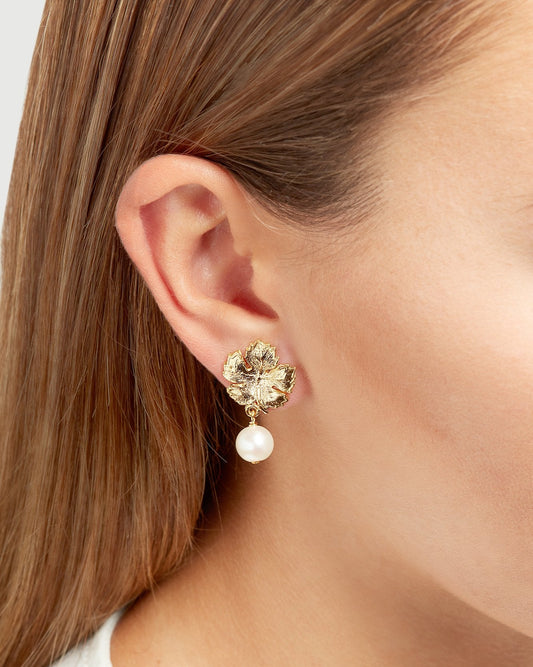
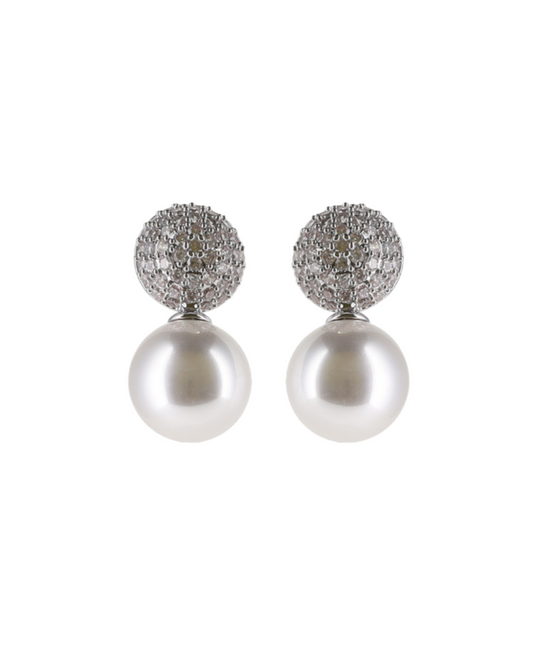
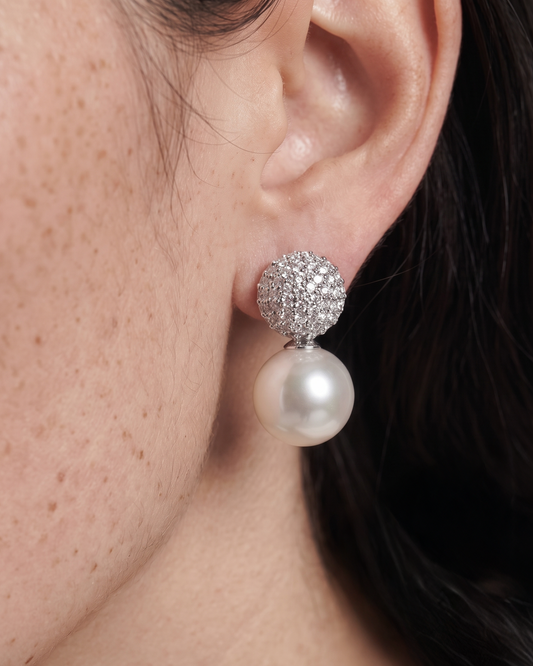
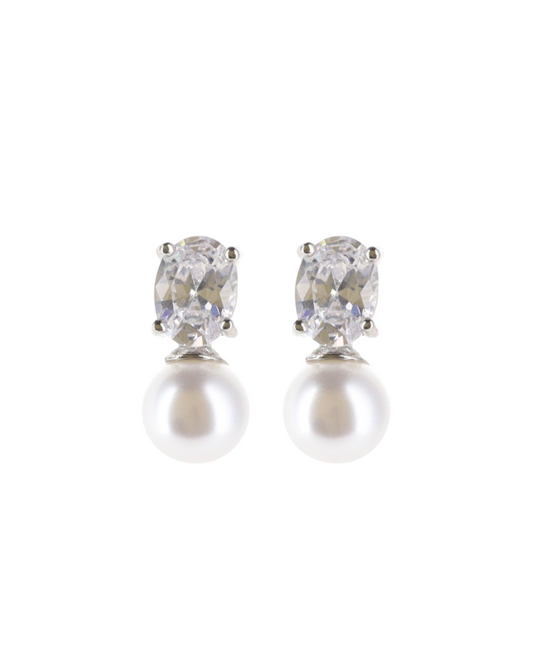
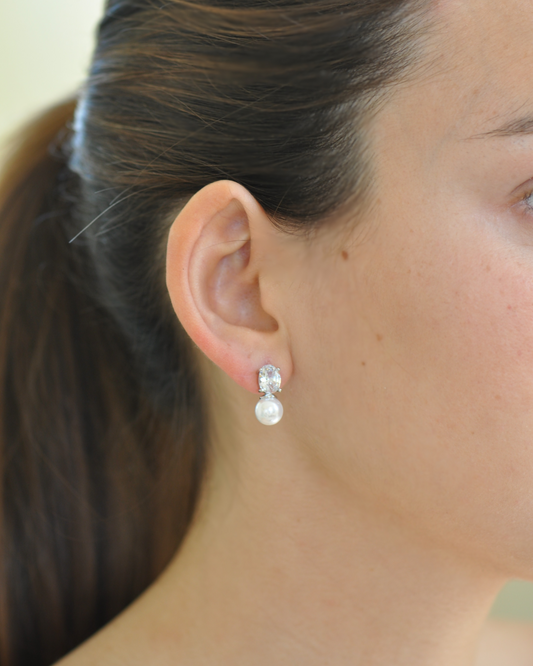
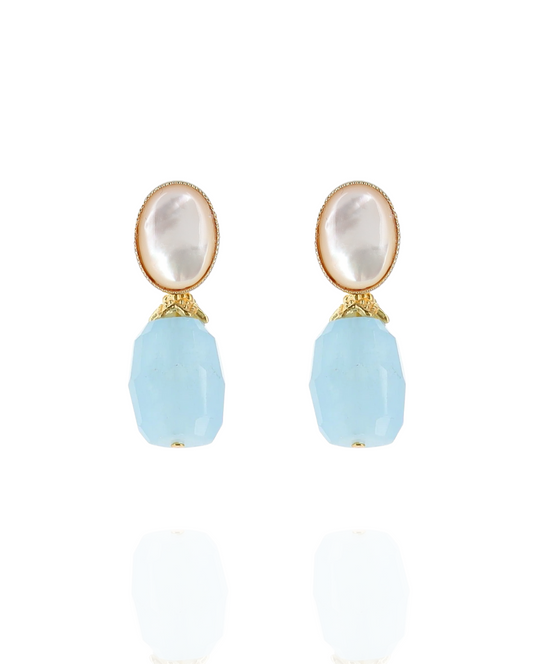
- Small stud earrings, especially clip-ons or pierced studs in a single stone
- Fine hoops, no larger than the lobe
- A single delicate ring, or a watch worn alone
- Hair pulled back or up, to keep the line from ear to collarbone clean
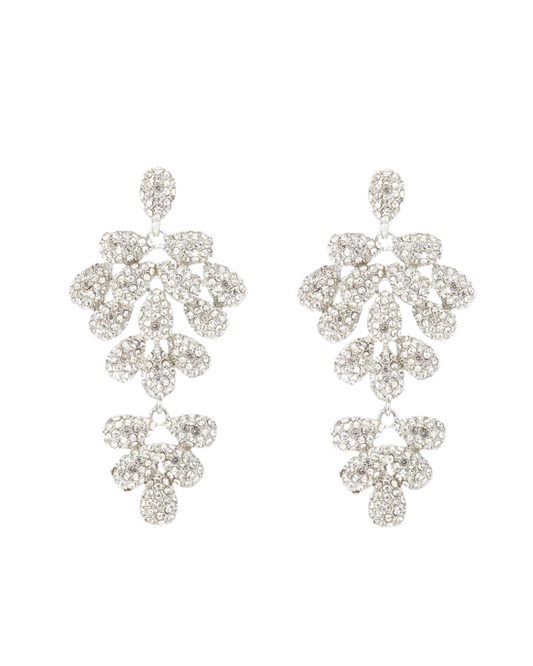
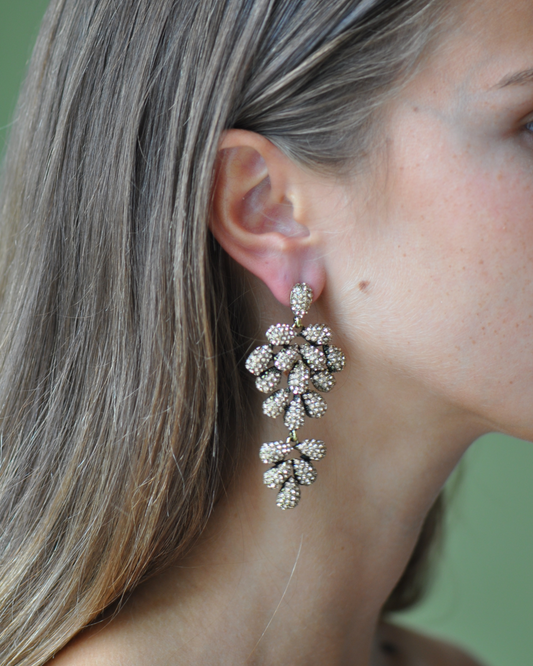
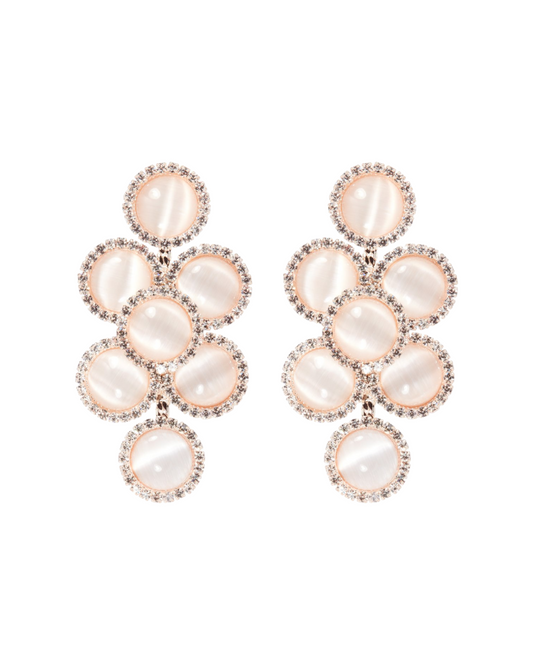
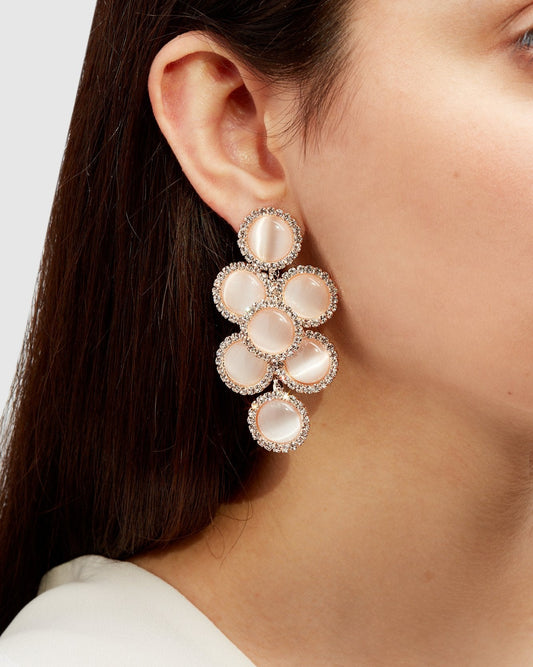
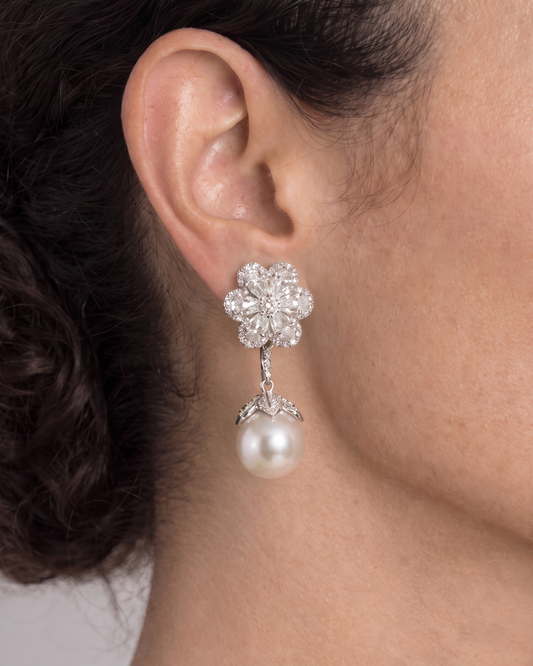
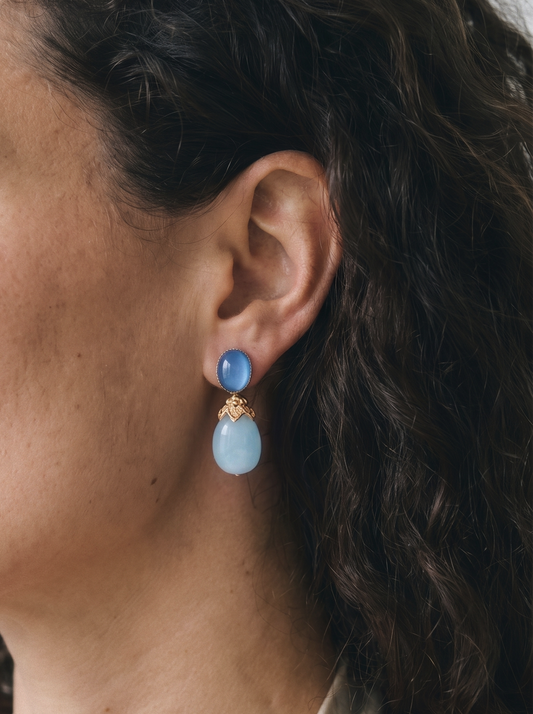
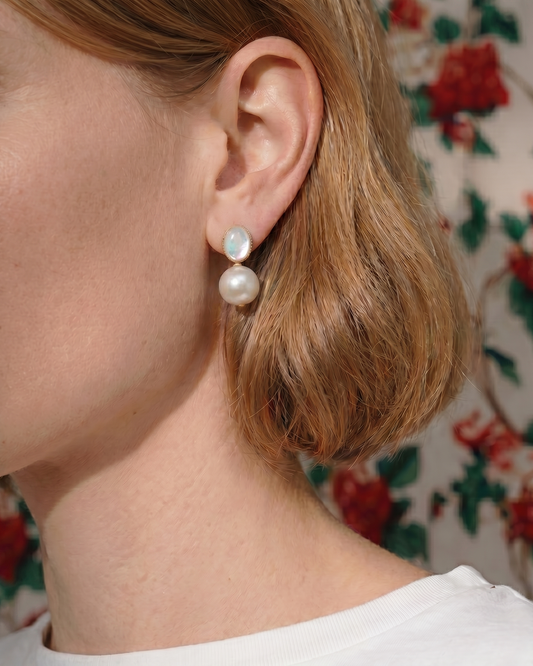
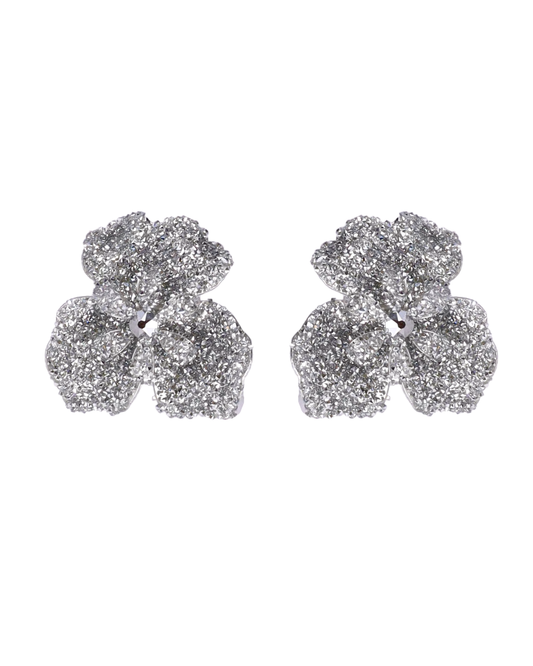
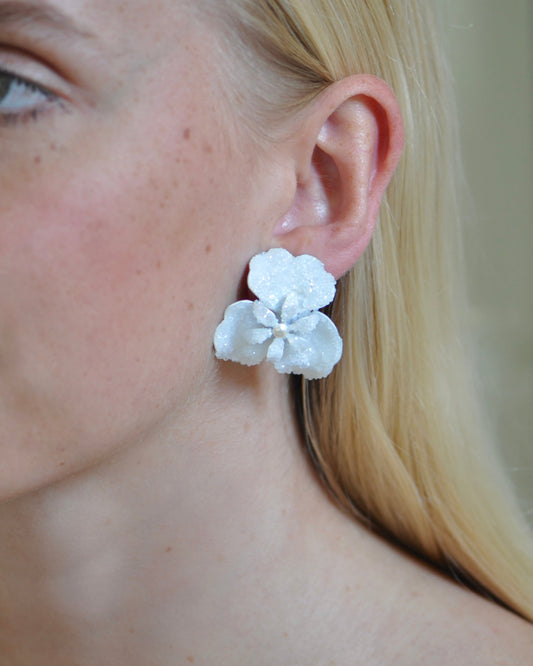
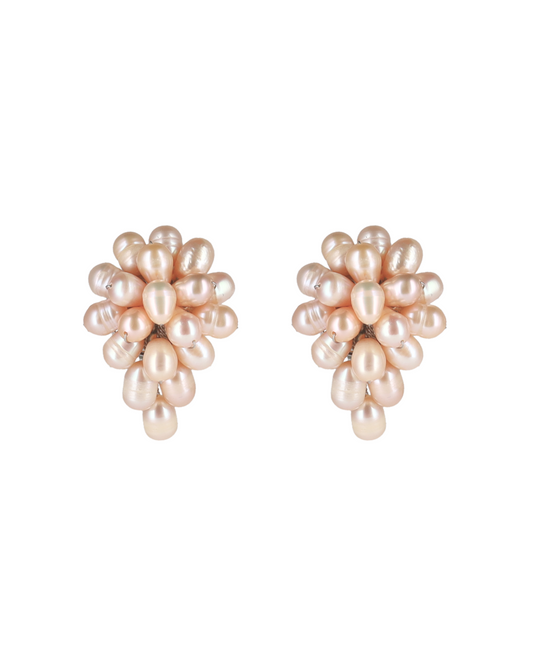
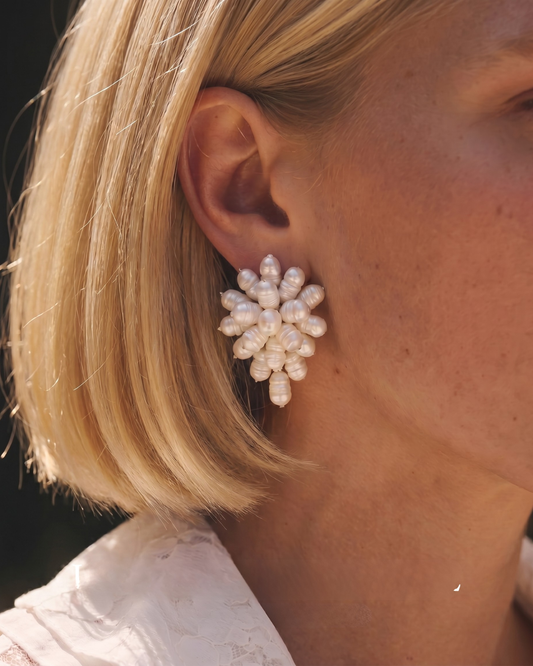
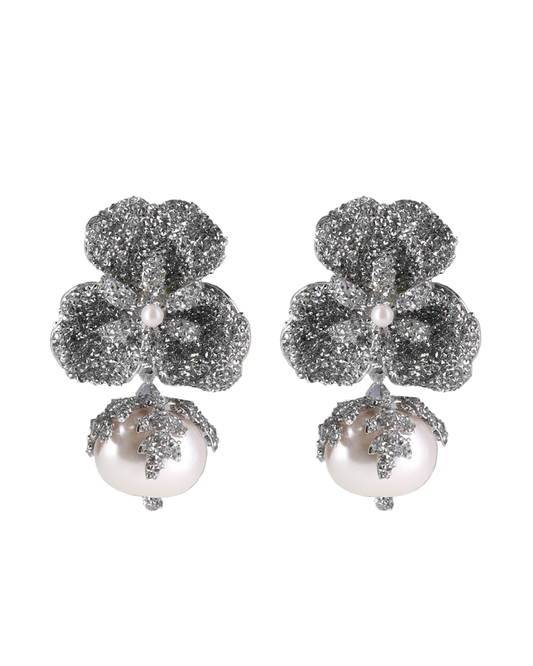
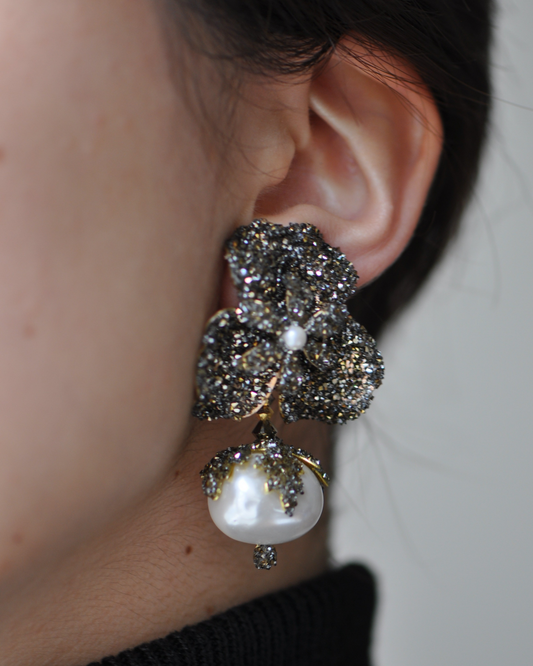
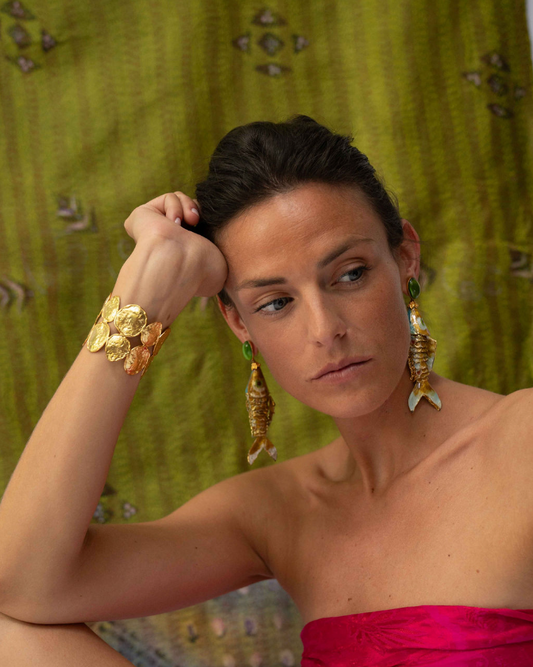
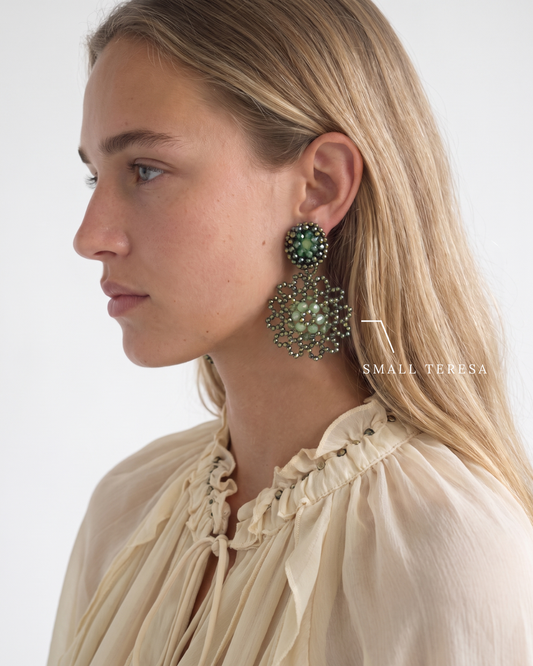
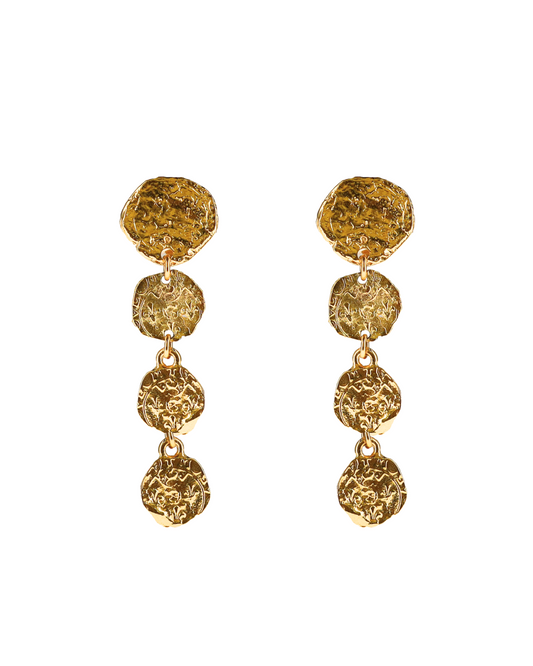
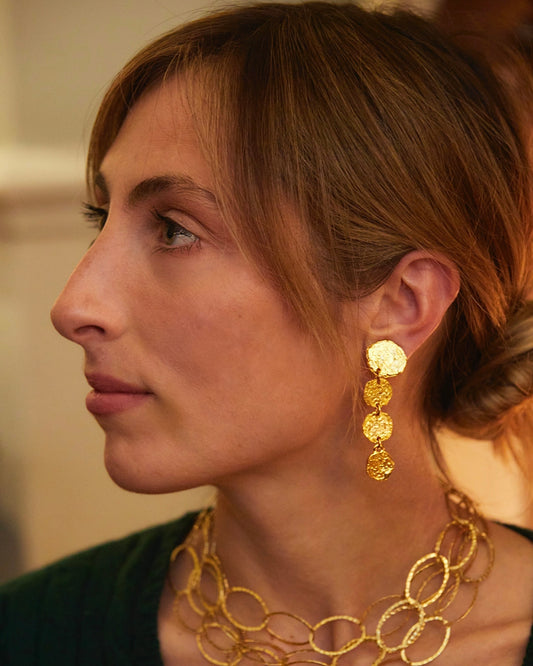
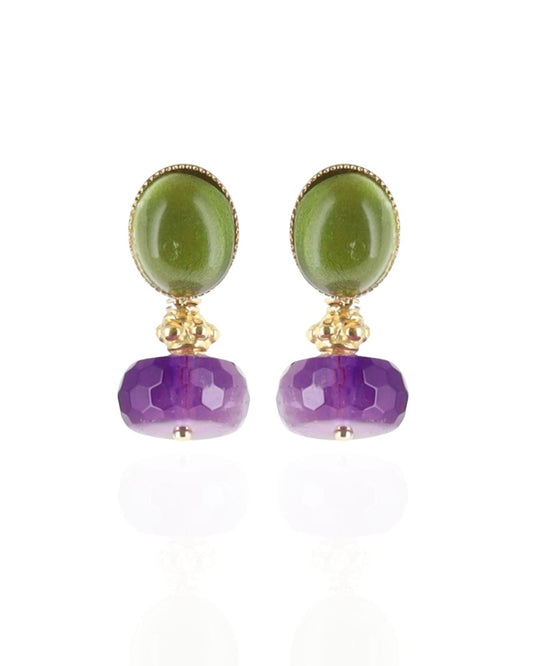
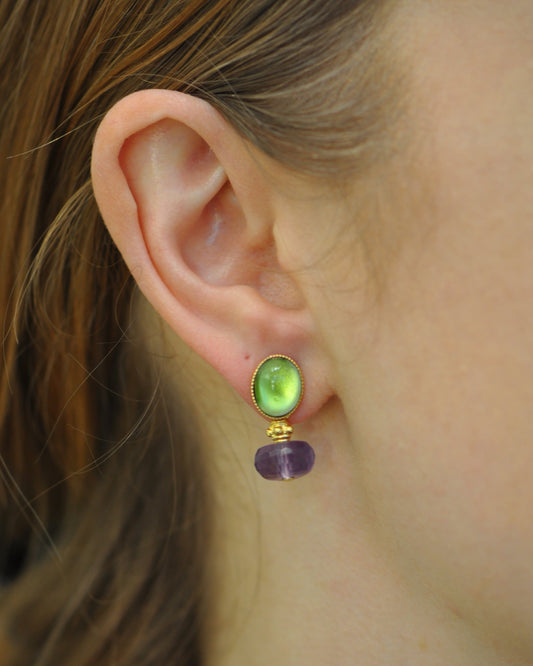
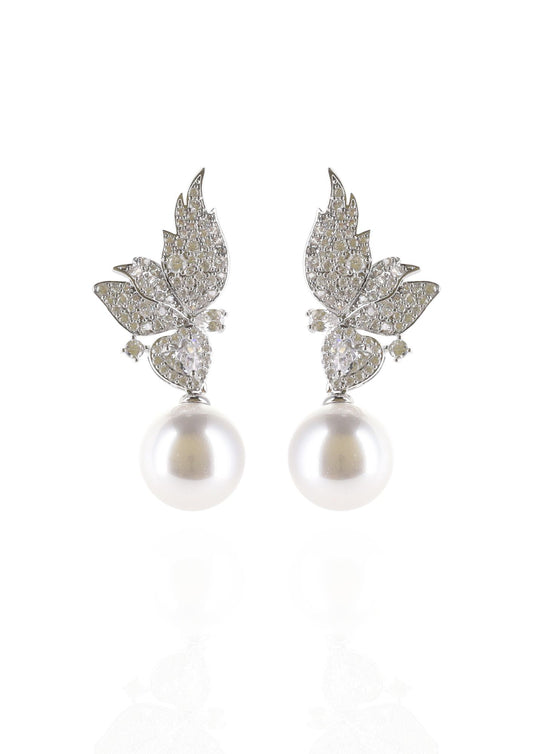
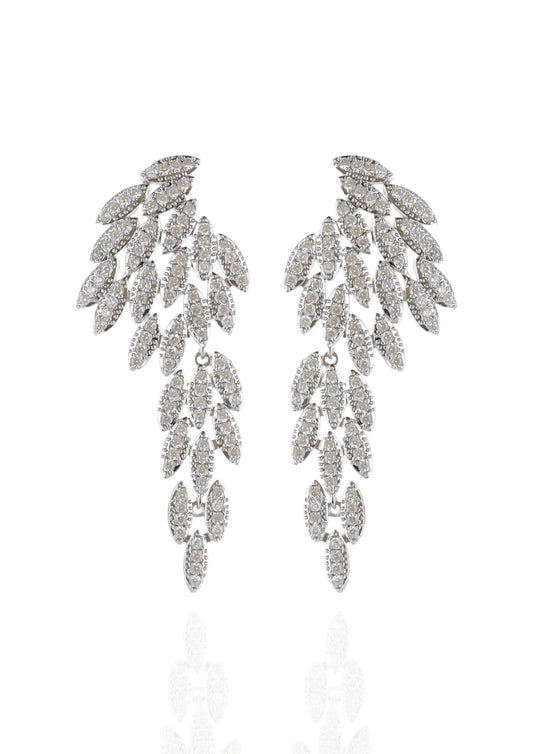
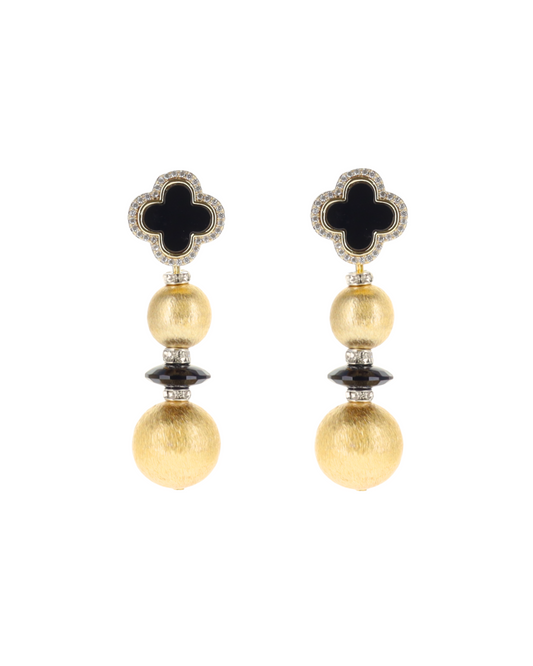
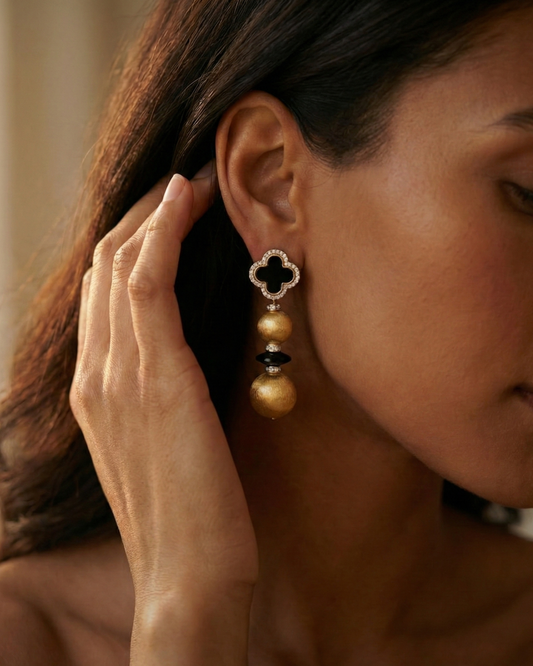
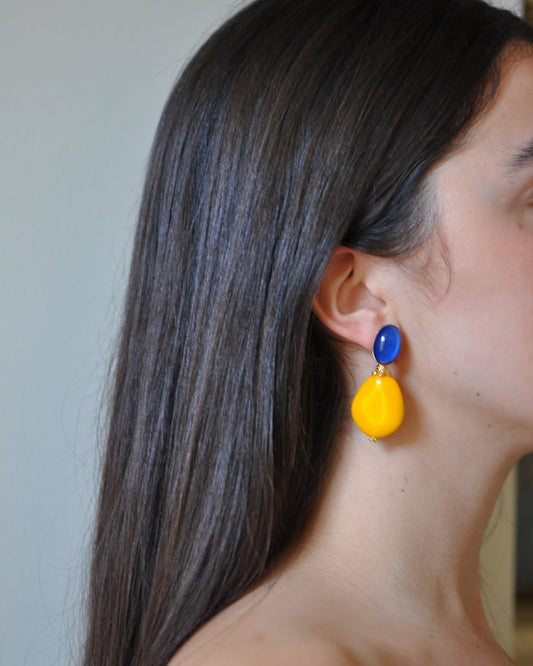
The mistake to avoid is pairing a chunky statement necklace with chandelier earrings or a heavily layered wrist. Two focal points compete; they do not enhance one another. Laurence designs both bold and delicate pieces precisely so a considered ensemble can be built from a single maker, including a wide selection of clip-on and pierced simple stud earrings, with guidance on how to wear clip earrings comfortably alongside a bold necklace.
Style by Occasion
A statement necklace adapts more easily than people often expect. The same piece can read as relaxed or formal depending on what surrounds it.
Daytime and workwear. A statement necklace transforms a tailored shirt, a knit, or a blazer into something distinctive. For everyday wear, look for a piece with strong colour but moderate scale, something around bib-length rather than full sculptural collar.
Evening and occasion. This is where showstoppers come into their own. Sculptural collars, multi-strand beaded pieces, vivid combinations of semi-precious stones. The right necklace can replace a clutch, a heel, or an updo as the focal point of an evening look.
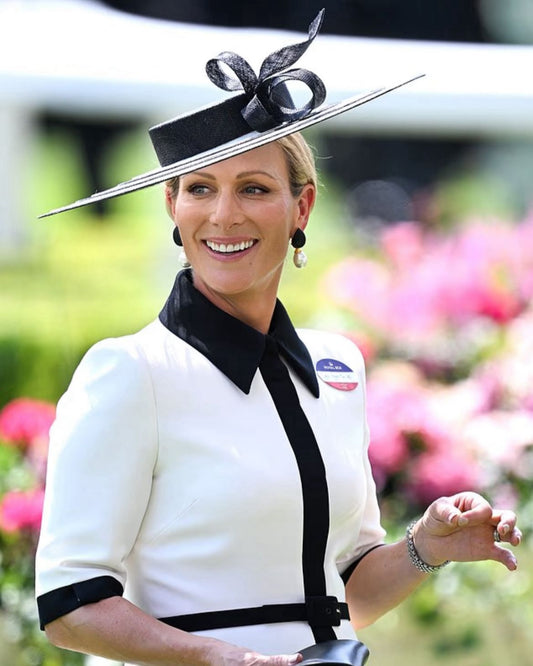
Weddings, the races, and London's social calendar. Laurence Coste pieces are at home at Royal Ascot, Epsom Derby, Chelsea in Bloom, and the private dinners and gallery openings of the London season. The principle for occasion dressing is the same as for the wardrobe: pair a bold necklace with a tonal outfit rather than a competing print, and let the piece carry the look.
Layer with Intention (Or Not At All)
The question of whether to layer a statement piece comes up often, and the honest answer is: usually, no. Most statement pieces look strongest worn alone.
If you do choose to layer:
- One piece must be clearly the focal point. Two statements cancel each other out.
- If the statement piece is wide or beaded, layer above it with one or two finer chains
- If the statement piece is long, keep everything else above the collarbone
- Vary the lengths visibly. Necklaces sitting too close together read as a tangle rather than a curated stack
Layering is a choice, not an obligation. A well-chosen single piece against a clean neckline is rarely improved by addition.

A Note on Quality and Care
A true statement piece is an investment in design, and quality construction is what allows a bold necklace to wear well across years and occasions.
Every Laurence Coste piece is handmade in her Chelsea studio, with a gold-plated sterling silver base, ethically sourced semi-precious stones, and the limited quantities that come with one-by-one craftsmanship. Every piece comes with a six-month warranty and a lifetime care service: repairs, regilding, and restringing are available years after purchase, so a treasured necklace stays in wearable condition for decades.
A few simple habits of jewellery aftercare will extend the life of any statement piece:
- Store flat, in the original box or pouch, to protect plating and stones
- Apply perfume, hair products, and moisturiser before putting jewellery on
- Wipe gently with a soft, dry cloth after wear to remove any residue
- Avoid water, extreme temperatures, and chemicals where possible
Frequently Asked Questions
Are Statement Necklaces Still in Style?
Specific shapes, materials, and colours move in and out of focus across seasons, but statement jewellery as a category has remained a constant for decades. Handmade, considered statement pieces sit outside seasonal trend cycles in a way that mass-produced trend pieces do not. A well-designed necklace bought in 2006 still reads as current today, which is exactly what a piece by Laurence Coste is designed to do.
What is the 2-1-1 Rule in Jewellery Styling?
The 2-1-1 rule is a contemporary editorial guideline used by fashion editors to create visually balanced accessorising: one focal piece, two supporting smaller pieces, and one wrist or neck accent for finish. It is a starting point rather than a strict formula. For any statement necklace look, the necklace itself is almost always the "one," with smaller earrings, a fine ring, and a watch or bracelet completing the balance.
What Earrings Should I Wear with a Statement Necklace?
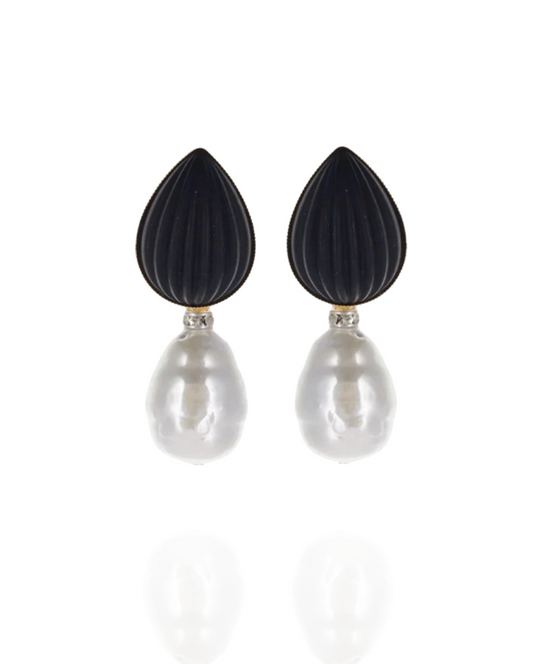
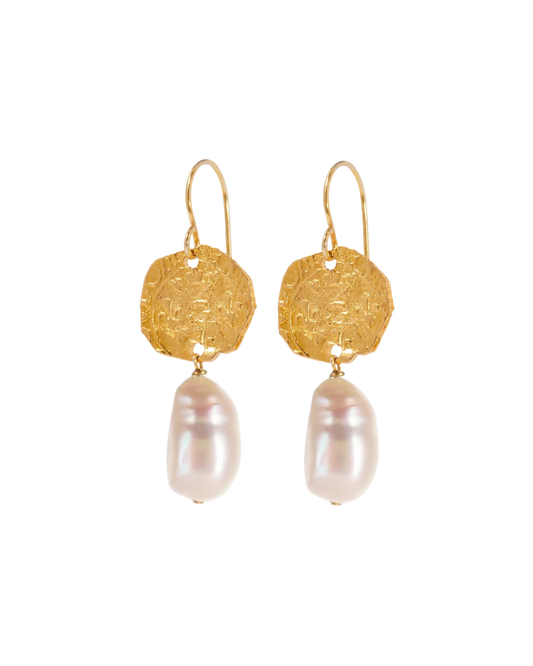
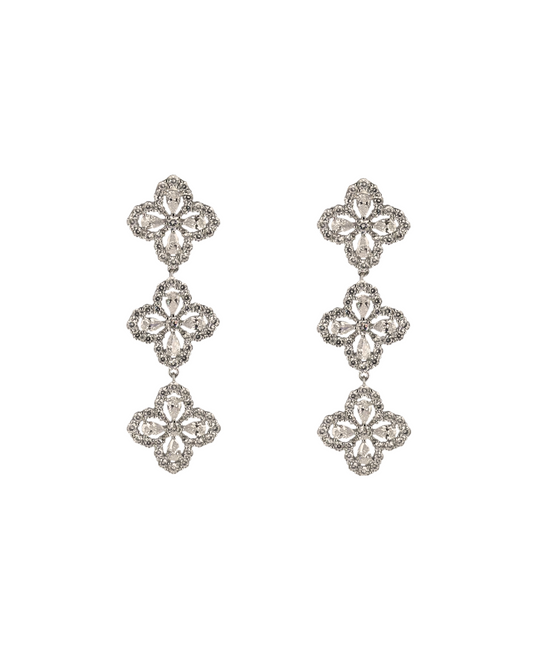
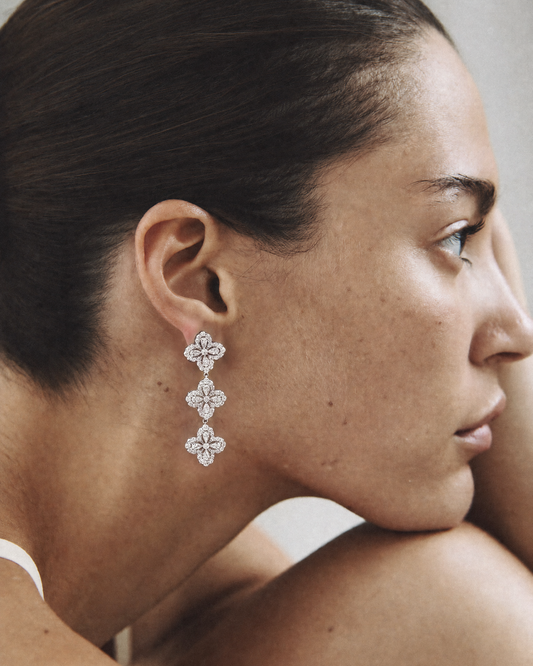
Restraint is the rule. Small studs, fine hoops, or a single sculptural earring will support a statement necklace without competing with it. Bold earrings paired with a chunky necklace create two focal points that fight for attention. Laurence Coste designs both bold and delicate earrings in clip-on and pierced styles, so a complete look can be built from a single collection.
How Do You Wear a Statement Necklace with a Plain T-Shirt?
A scoop or crew-neck cotton tee is one of the best canvases for a statement necklace. Tuck the tee into tailored trousers or denim to anchor the look. Pair a chunky beaded piece or a sculptural collar with the tee for an effortless but considered weekend or summer look. The contrast between the simplicity of the cotton and the boldness of the necklace is what makes the outfit feel intentional rather than accidental.
Can You Wear a Statement Necklace to a Wedding?
Yes, with care. Choose a piece in a single dominant colour family that complements the dress code rather than competing with it, and see our full guide to jewellery for wedding guests for how to balance a necklace against your neckline and the formality of the day. A turquoise or pearl statement necklace works beautifully for daytime weddings. A sculptural gold-plated collar or vivid semi-precious piece suits an evening reception. Avoid embellished necklines and busy prints when the necklace is the focal piece, and let the dress quietly support the jewellery rather than compete with it.